
Written by Philip W. Chung and directed by Jeff Liu, My Man Kono brings to life the true story of Toraichi Kono, a Japanese émigré who became an employee and confidante of movie star Charlie Chaplin. Now making its World Premiere at New York City’s A.R.T./New York Mezzanine Theatre, the play is smart, fascinating, and highly entertaining. Set in various times in history from 1903 to 1961 in both the U.S. and Japan, My Man Kono tells its story against the larger historical settings of both Hollywood and the United States as a whole. Given its time in history, pervasive racism against “Japs” and “Orientals” colored every aspect of the Kono’s story. In the years following the end of his association with Charlie Chaplin, Kono was arrested by the FBI on suspicion of espionage in the lead-up to World War II. He was held in an internment camp, with the threat of being deported back to Japan.
It may seem hard to believe in this day and age, but Los Angeles, California was once a small town– albeit one that was growing very fast and full of “opportunities”, particularly in the movie business. The silent movie era began in the 1890’s, but it wasn’t until 1923 when the famous Hollywood sign was erected… although the sign actually read “HollywoodLAND” at the time. It was 1916 when the British immigrant Charles Spencer Chaplin, AKA Charlie Chaplin (Conlan Ledwith) met the Japanese immigrant Toraichi Kono (Brian Lee Huynh). Chaplin, at that time, was an up-and-coming silent movie actor and filmmaker who would eventually become a worldwide cinematic icon. Kono became Chaplin’s valet, secretary, muse, bodyguard, and long-suffering voice of reason. He even scored additional work as an extra in some of his Chaplin’s movies: in short, he was “My Man Kono!”. Kono and his wife Isami (Kiyo Takami), as a result of Kono’s celebrity association, became celebrities of sorts themselves in L.A.’s Japanese community. (As Kono tells his wife, “We are the envy of all the Japanese in town!”) Seemingly as quickly as it started, the 18-year idiosyncratic relationship between Chaplin and Kono came to an end thanks to issues with actress Paulette Goddard (Emma Kikue), Chaplin’s third wife. Chaplin and Kono presumably never met up again. Act 1 of My Man Kono closes with the tragedy of Kono’s loss of his wife, and the foreshadowing of the aforementioned threat of his deportation. Had the play ended at intermission, Act 1 of My Man Kono could have very easily been a taut, stand-alone piece on its own. Yet, Act 2 keeps the drama moving; the final 15 minutes really trigger a wide variety of emotions. Without giving too much away, Act 2 is largely a searing legal drama, with a large amount of historical background– including but not limited to a sad but accurate representation of the anti-Japanese hysteria at the time. Given what the title character goes through, it’s difficult to call the ultimate conclusion a “happy” ending, although a modest degree of fairness does manage to seep through.

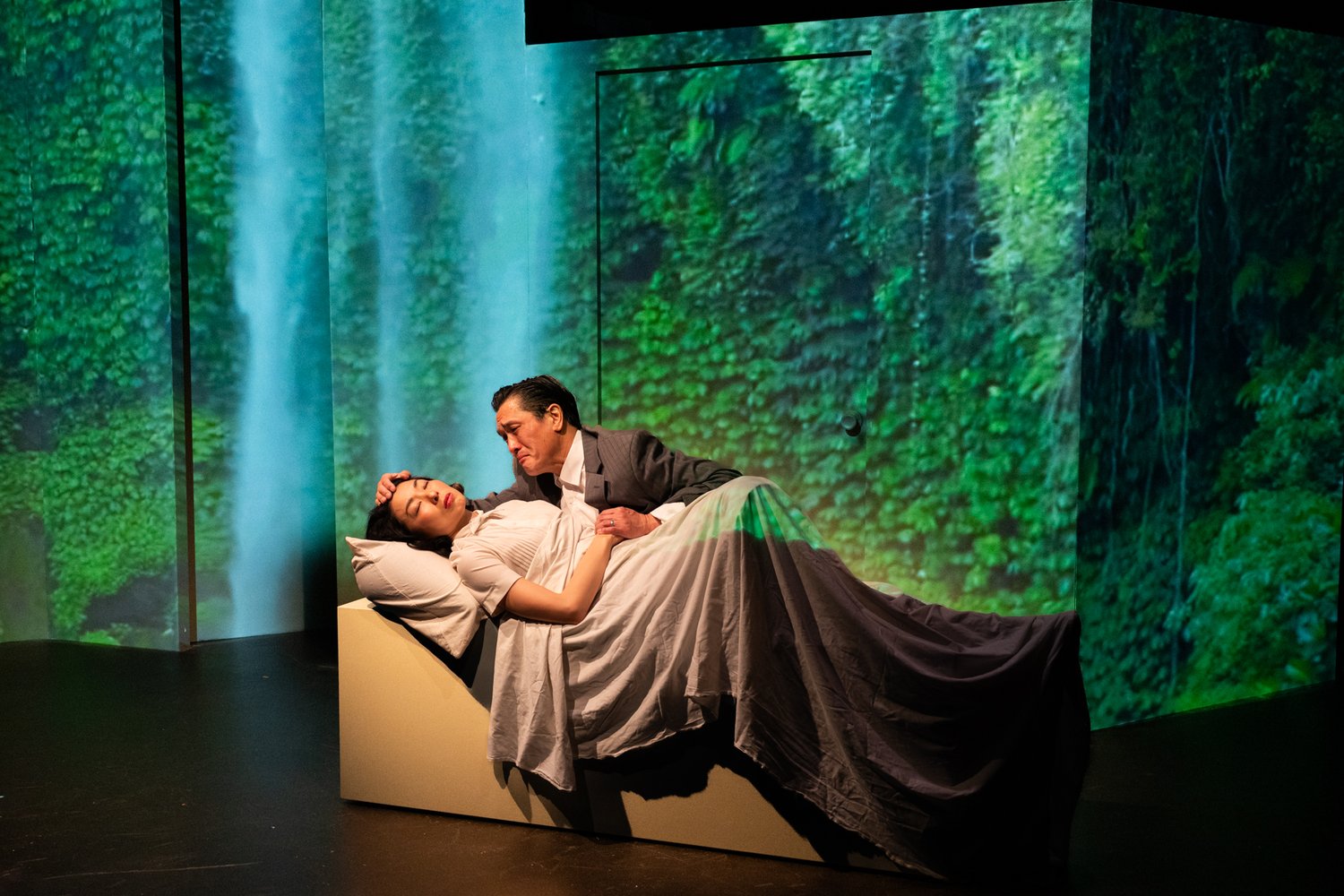
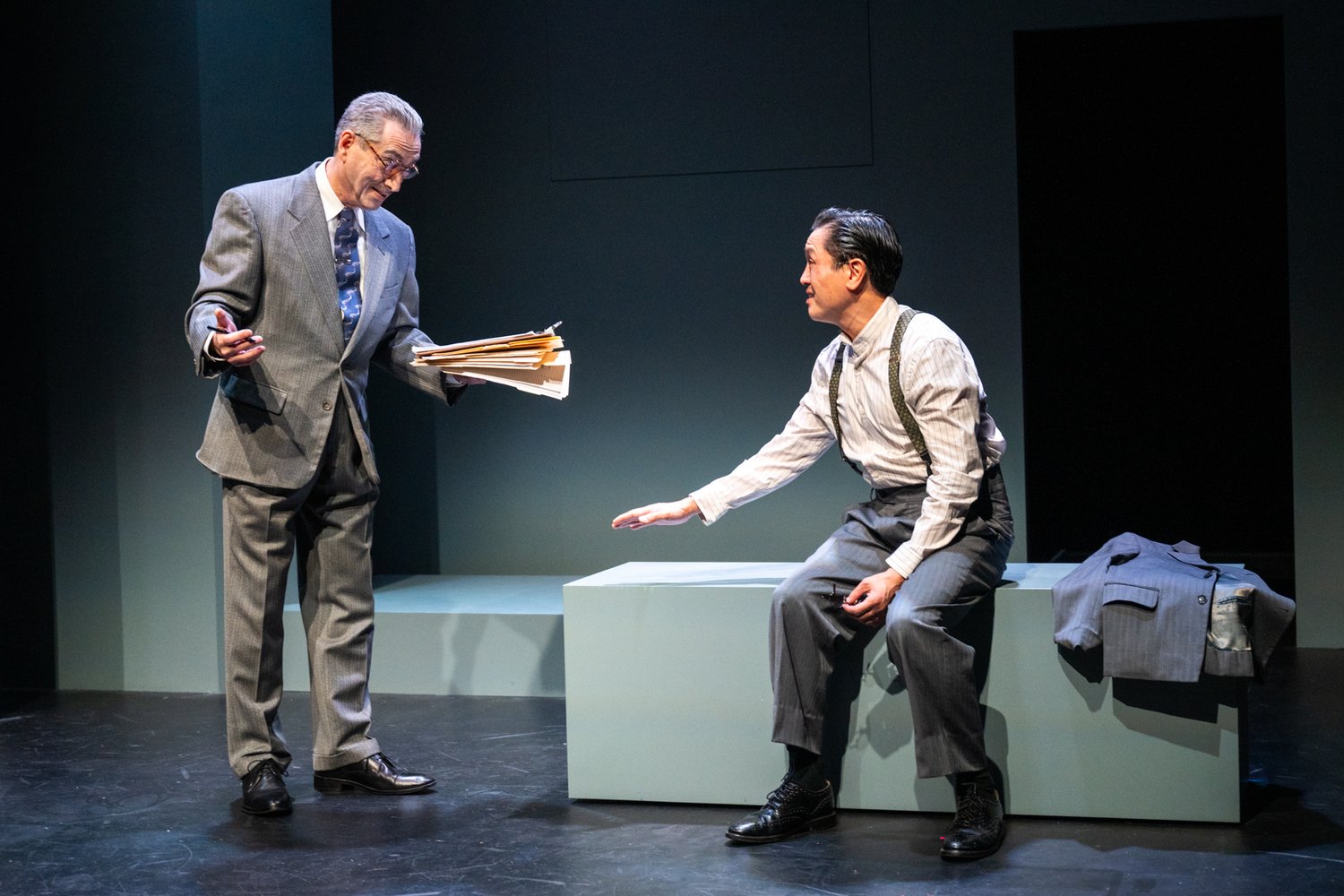
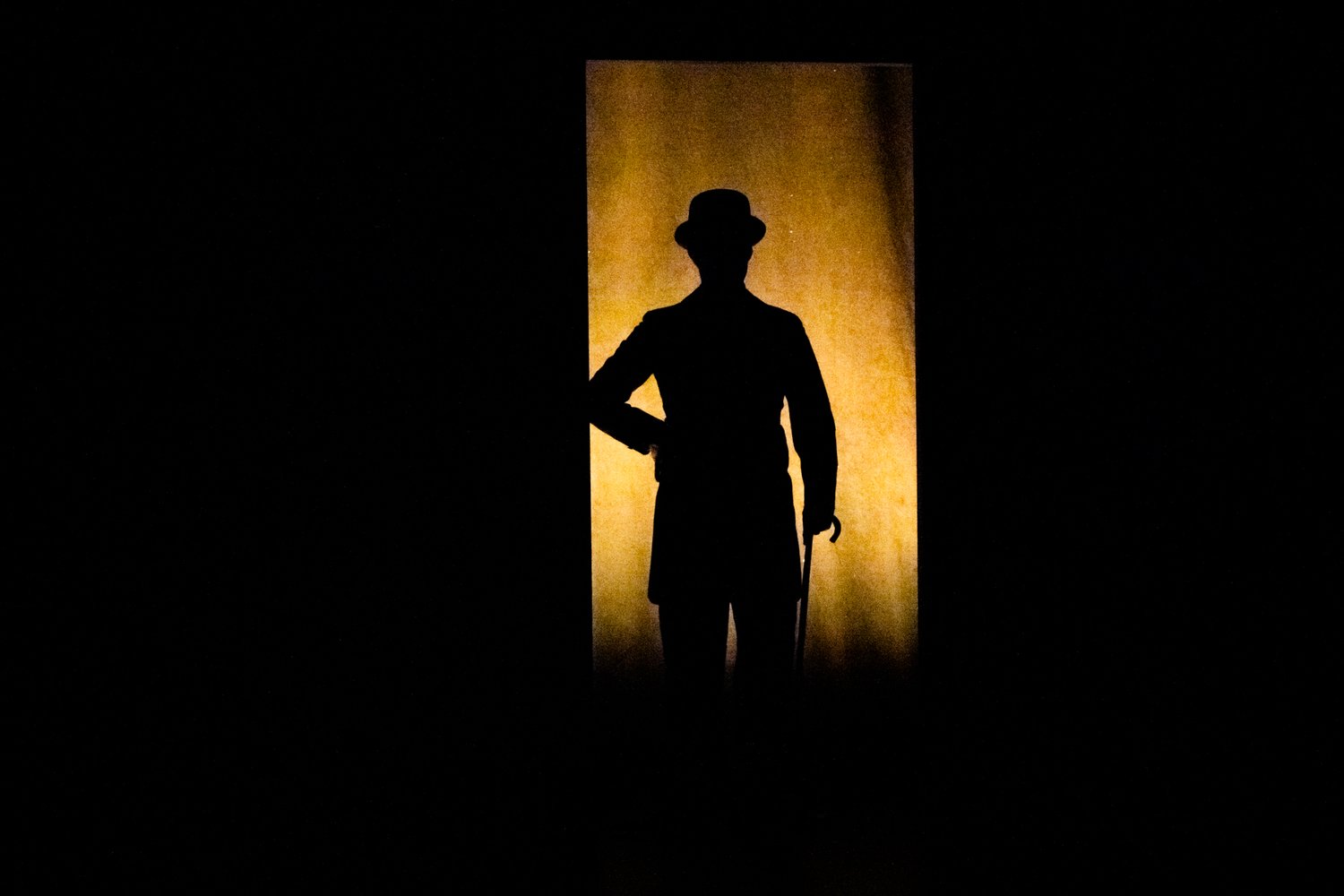

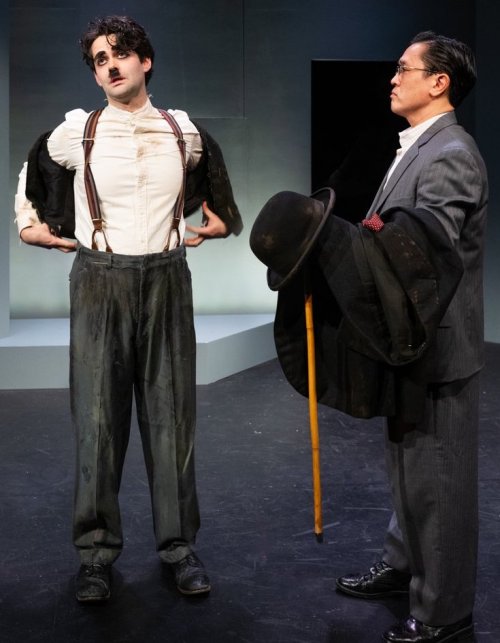
The entire cast of My Man Kono is excellent. In the play’s most intense role, the hardworking Brian Lee Huynh does a lot of the play’s heavy lifting as the play’s titular Toraichi Kono– who seemingly had several lifetimes worth of tragedies in a relatively short amount of time. His character is on stage almost the entire run of the play, which, FYI, is an incredibly tight and fast-moving two hours. Conlan Ledwith excels as Charlie Chaplin, with his interpretation of The Little Tramp getting everything right– from the British accent to his ability to mimic those famous Chaplin-esque pieces of physical comedy that even audiences in the digital age will recognize. It is quite thrilling to see a movie star from yesterday be reincarnated in his youthful likeness, in 3D and full color, in… ahem, “modern times”. That said, thanks to Ledwith’s performance, the audience also gets to see the contrast between the actor’s public side (a beloved clown) and his private side (a vain, self-centered womanizer). While Kono and Chaplin are the main characters in this play, the secondary characters all get their chance to shine. Alva Blake, played by Cody LeRoy Wilson, is a character who is so unlikable, yet also so funny, that we want him to come back for more of that enviable “We love to hate him!” vibe. Surely enough, Wilson-as-Blake comes back for more in Act 2… and it’s a doozy. As Isami Kono, Kiyo Takami is solely responsible for some of the play’s most tender and heartstring-tugging moments. Robert Meskin is excellent as Wayne Collins, Kono’s lawyer; James Patrick Nelson is equally superb as F.B.I. Agent Horn. In Act 2, Nelson steals every scene he’s in, despite not exactly being a sympathetic character. In multiple roles, most of which are in the vein of the proverbial Hollywood starlet, Emma Kikue adds some much-needed levity to the play every time she appears. Rounding out the cast is Jae Woo in the pivotal role of Itaru Tachibana. It also must be noted that many of the cast perform multiple roles– and their transition between those roles is very impressive. The set of My Man Kono is also bolstered by the meticulous attention to detail, which includes the costumes by Karen Boyer and the props by Sheryl Liu. (You have to love those vintage-style cameras used by the reporters!) The play also makes the most of the intimate space of A.R.T/NY Mezzanine Theatre with artistic lighting and projections, courtesy of Asami Morita and Cinthia Chen respectively.
My Man Kono is a must-see.
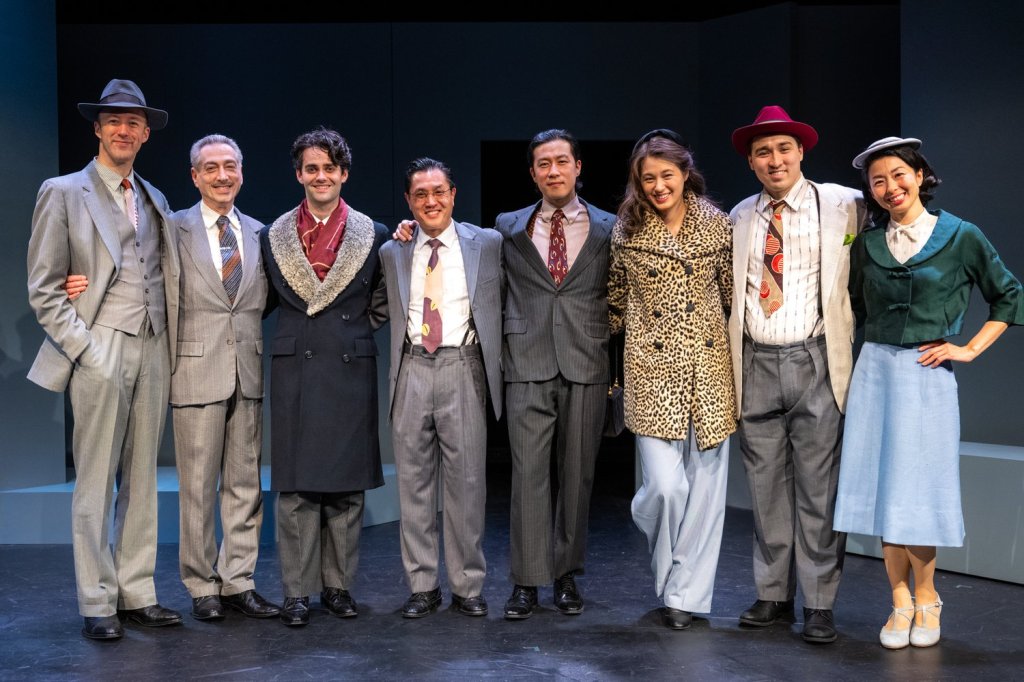
Pan Asian Repertory Theatre’s My Man Kono continues through Sunday, March 9, 2025 at A.R.T./New York Theatres, 502 W 53rd Street, in Manhattan. For tickets and more information, visit www.panasianrep.org.
Photos by Russ Rowland.
 LAVENDER AFTER DARK (because life begins when the sun goes down...)