

Back in September 2011, almost 50 years after her song Move Over Darling (from the movie of the same name) became a hit in the UK, America’s sweetheart Doris Day broke a new record in the music biz when she became the oldest artist to have an album of new material in the British Top Ten. That album was My Heart. At the time, Doris was… 89 years old (!). Thanks to such phenomena as YouTube and digital platforms for music, it is now easier than ever to rediscover the artistic legacy of the woman who was born Doris Mary Kappelhoff on April 3, 1922 in Cincinnati, Ohio. Playwright Paul Adams indeed knows about the transgenerational appeal of Ms. Day, as evidenced by his loving, well-crafted musical drama Doris Day: My Secret Love. The play, directed by Melissa Attebery with musical direction by Adam Tilford, is now enjoying its World Premiere at 28th Street Theater (TADA) in Manhattan. Starring the intensely engaging Tiffan Borelli as Day, the show is set up as a musical memoir, circa 1985, with a now middle-aged but eternally youthful Doris who is only too happy to tell the audience about her life in show business. Poised to become a triple threat of an entertainer, the young Day’s desire to be a dancer was put on hold due to an injury. As you may have guessed by now, the ingenue didn’t let car accident that stop her from becoming one of Hollywood’s biggest stars and one of pop culture’s most enduring icons. She would go on to make her mark in movies, music, and animal rights activism. In Doris Day: My Secret Love, the talented Borelli is particularly skillful at having the audience get to be a part of the joy which Day felt in the many “highs” in her long career: the times when Day was “happier than a June bug in July“. One of those highs was when Doris had her first hit, 1945’s Sentimental Journey, which spent nine weeks at #1. There would be many other “firsts” along the way, both professionally and personally: her first movie contract, her first house, and first time experiencing motherhood. Later on, we learn about the 1962 musical Jumbo. The expensive movie wasn’t exactly a runaway hit. But it turned out to be a pivotal moment for Day, who bonded with the movie’s bigger star, Jumbo the elephant. (It must be mentioned that back in the pre-CGI 1960’s, if you needed an elephant for a movie, you GOT an actual elephant.) As shared in the play, Day’s friendship with the pachyderm started the love affair with animals which would continue through her entire life.

Of course, celebrities– regardless of how beloved they may be– also have to endure a lot of “lows” along with their “highs”. Day did have four husbands (One of which is not even mentioned by name in the play [!]), an unexpected hysterectomy at age 30, and a rocky relationship with her son. One of those aforementioned husbands was given, shall we say, “special” attention in Paul Adams’ play: Marty Melcher, of whom calling a “megalomaniac” would be flirtation. But the biggest challenge Day faced was the loss of her frequent co-star Rock Hudson, who Borelli-as-Day refers to as the man who she “spent more time in bed with than my own husband”. The subject of Hudson’s death from AIDS in 1985 becomes a very pivotal moment in Doris Day: My Secret Love. Still, true to her image, “the show must go on”– and Day kept right on smiling through the tears. At least in public…

The show’s biggest asset, hands down, is Ms. Borelli in the title role. Her embodiment of the Doris Day persona starts with her appearance. The actor gets Day’s look down– from the star’s trademark blonde hairdo to her wardrobe. Completing the look, of course, was Day’s wide smile that made audiences believe they were in “heaven tonight” for two hours while they watched her on the big screen. There’s also Borelli’s voice. From the opening number Lullaby of Broadway right on through to the finale, she captures Day’s range and patented style: smooth as freshly churned vanilla ice cream (and, of course, just as sweet). The physical resemblance and Borelli’s channeling of Day’s eternally sunny aura are actually quite astonishing; at times, it’s difficult to believe that we are not actually watching the real Doris back in her hey-Day.
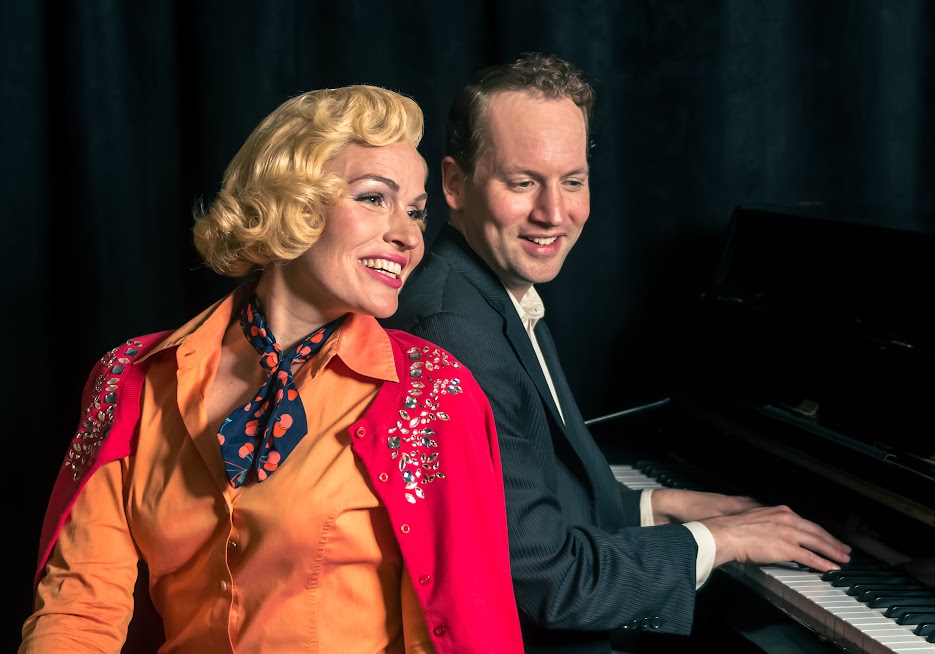
In a way, the creators of this piece have a lot to their advantage from the get-go. So many of Day’s songs have cemented their status into pop culture, sounding just as good in 2023 as when they were first heard decades ago. Que Sera, Sera (Whatever Will Be, Will Be), for example, has been reworked many times through the decades. However, Que Sera, Sera and most of the other 13 songs in this show are widely identified with Doris Day only. At one point, Borelli-as-Day invites the audience to sing Que Sera, Sera with her. Needless to say, there was no need for the projection of the lyrics onto the stage. The audience almost instinctively knew how to join in. Another example is Secret Love, from Calamity Jane, which not only became a #1 hit for Day in both the U.S. and the UK, but also has been adopted as an anthem by the LGBTQ community.
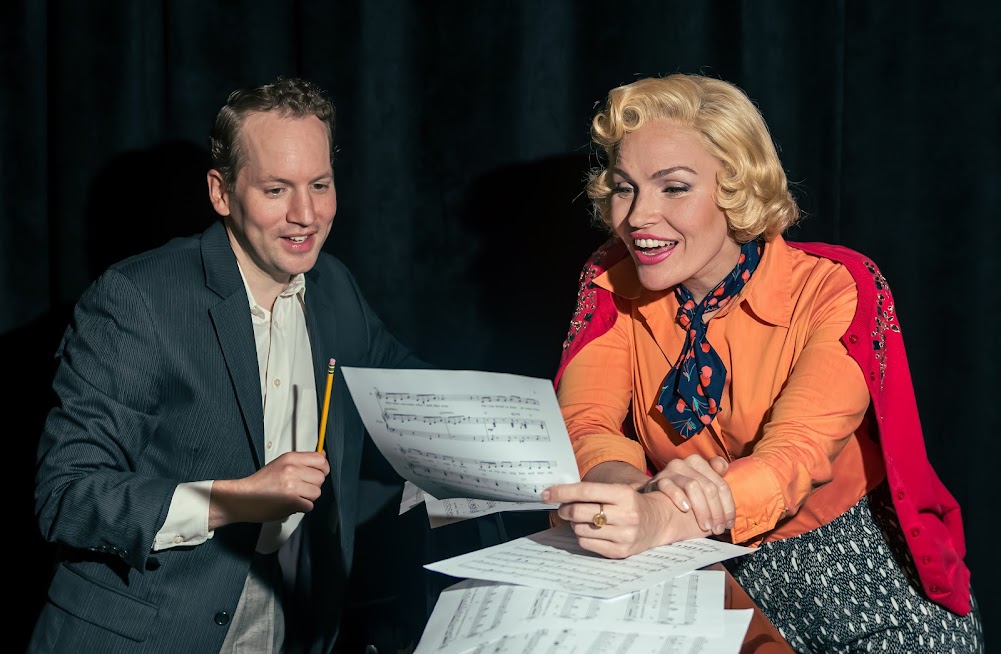
This would be a good time to give a shout-out to the hard-working David Beck. Beck not only proves to be a gifted pianist from the show’s very first musical note, but he also portrays some many of the men in Day’s life through her career trajectory. Most of the play’s running time, Beck is playing Les Brown, acclaimed band leader and one of Day’s most loyal friends in show business. He also plays, at various times, her father, her husbands, Alfred Hitchcock and other showbiz players, her son Terry Melcher, and others. The interactions between Borelli as Day, and Beck as the men in Day’s life, are well portrayed throughout the show; the actors’ chemistry is very good.
By now, you may be asking if Doris Day: My Secret Love explores the woman behind the Hollywood star. It’s challenging to find a celebrity nowadays who is universally as beloved as Doris Day was: the kind of celebrity where it is difficult to find ANYONE with something bad to say about them. Dolly Parton is a modern-day equivalent. But Parton is the first one to share that “Dolly Parton” is only a character she plays: the persona who the public wants to see. Did the eternally sunshiny Doris Day feel the same way? How did the woman who preferred the nickname “Clara” feel about her image? Doris Day: My Secret Love does indeed “go there”, resulting in a rather shocking conclusion. I won’t give too much away, except to say that if you’ve ever wanted to hear Doris Day utter the “F” word, there you go. That moment only made me love our Ms. Day– and Doris Day: My Secret Love, the play– even more!
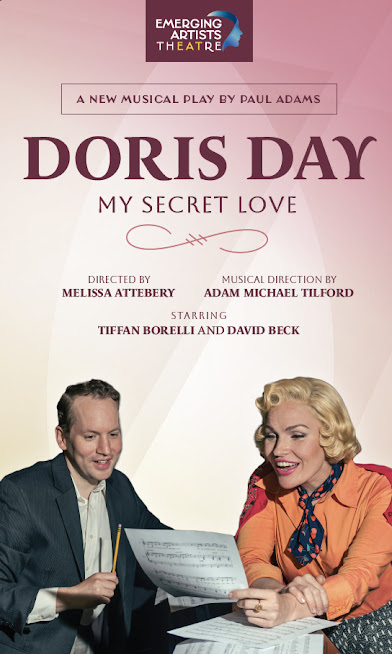
Doris Day: My Secret Love continues through Sunday, October 29th. Performance schedule: Mondays at 7pm, Wednesdays at 2pm, Saturdays at 7pm, and Sundays at 5pm. Running time: 85 minutes. All performances take place at the 28th Street Theater (TADA), 15 West 28th Street (between Broadway and 5th Avenue), 2nd Floor (elevator accessible), New York, NY 10001. Subways: N/R/1/2 to 28th Street, B/D/F/W to 34th Street. Tickets are $59 and are available here.
Photos by Richard Rivera.
 LAVENDER AFTER DARK (because life begins when the sun goes down...)