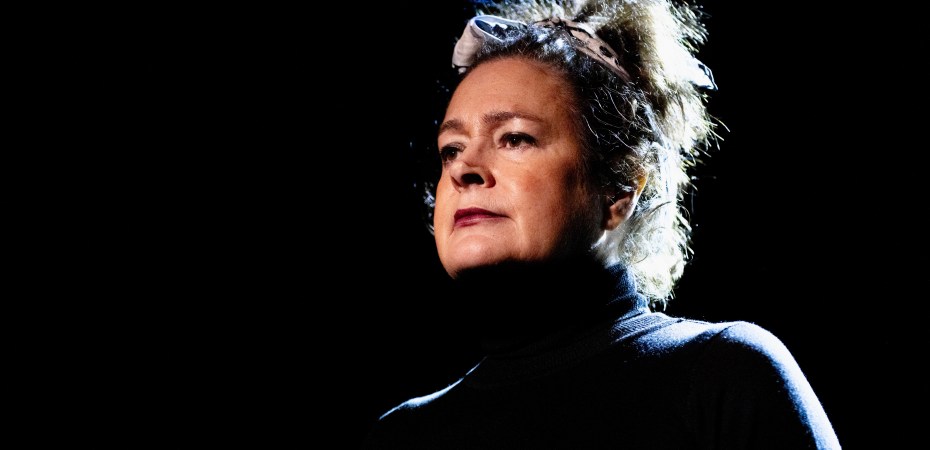
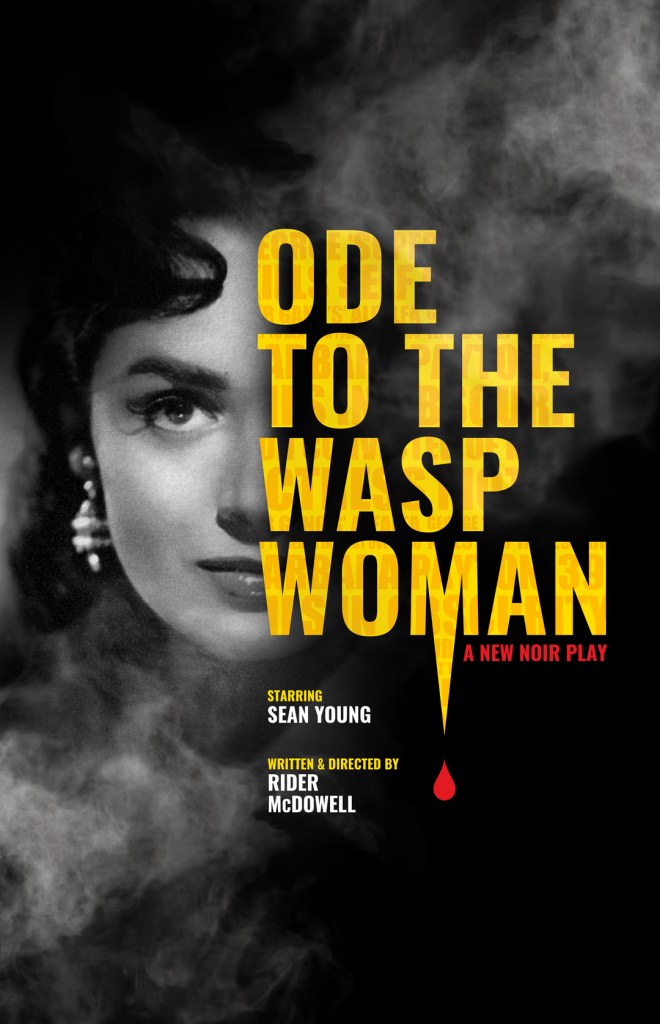
The titular character of Roger Corman’s 1959 black and white thriller The Wasp Woman is “Janis Starlin”, a cosmetics mogul who– in the quest for eternal youth– injects herself with a serum made from the royal jelly of the queen wasp. Her experiment… shall we say, doesn’t exactly end well. This iconic character was played by Susan Cabot. Cabot was a prolific “B movie” star who was praised for both her talent and her dark-haired, sloe-eyed beauty. Cabot’s personal life was often as dramatic as the acting roles she chose, complete with impressive highs and crippling lows. She appeared on screen with such legends as Humphrey Bogart and was romantically involved with the King of Jordan. But as her acting career came to a close, she suffered from mental illness and lived in seclusion with her son Timothy Roman. Cabot was not exactly a candidate for Mother of the Year: In an eerie bit of life imitating art, Cabot was discovered to have been experimentally injecting Timothy, who suffered from dwarfism, with frequent doses of human growth hormone. Thanks to the enduring legacy of The Wasp Woman, hardcore fans of classic horror movies probably know who Susan Cabot is; however, the actress’ infamous legacy has likely been diminished through the later generations. In Rider McDowell’s ambitious, lovingly constructed Ode to the Wasp Woman, the writer recreates the last days of Ms. Cabot (played by Sean Young, in her stage debut) as well as three other famous personalities from a long bygone era of TV and film. Each of these celebrities gets to tell their story with their own act. Carl “Alfalfa” Switzer (Josh Alscher) was one of the iconic child stars of The Little Rascals, which can still be watched on TV around the world today. George Reeves (Douglas Everett Davis) played, literally, the “greatest American hero” whose status is cemented in worldwide pop culture forever: Superman. Barbara Payton (Payton Georgiana) was a blonde beauty who was poised to become a major motion picture star after making an impression with the 1950 film Kiss Tomorrow Goodbye. Cabot, Switzer, Payton, and Reeves all found stardom and truly enjoyed their time in the spotlight. However, all four had something else in common: Each faced a premature and particularly tragic death. Ode to the Wasp Woman goes beyond the Wikipedia-style facts and, via a quartet of fine performances (particularly by Young as Cabot and Alscher as Switzer), lets its subjects tell their own stories. Needless to say, these stories aren’t pretty: Ode to the Wasp Woman deals with some heavy subjects, including but not limited to mental illness, suicide, alcoholism, child abuse, and incest (both actual and heavily implied). This is truly the dark side of “old Hollywood”; the stuff that mysteries and scandals are made of…

Act 1 explores the final days of Carl “Alfalfa” Switzer. No longer in demand in Hollywood, Switzer finds himself working odd jobs while trying to stay “relevant” in showbiz with gigs such as appearing at the grand opening of a supermarket. Boyish spirit and trademark Alfalfa cowlick notwithstanding, however, this short-tempered former child star is clearly dealing with some very adult issues. The character is savagely portrayed by Josh Alscher, inspiring both pathos and contempt. Even in the seats furthest from the stage, the audience can see the instability in his wild eyes. We sympathize with Switzer in such moments as when he tries to pick up a pretty Little Rascals fan (complete with an appropriately corny but admittedly catchy song), but the adult Alfalfa is patently unlikeable: It’s quite jarring to hear one of the Little Rascals drop the F bomb so many times or take a swig of booze while working as a bartender.
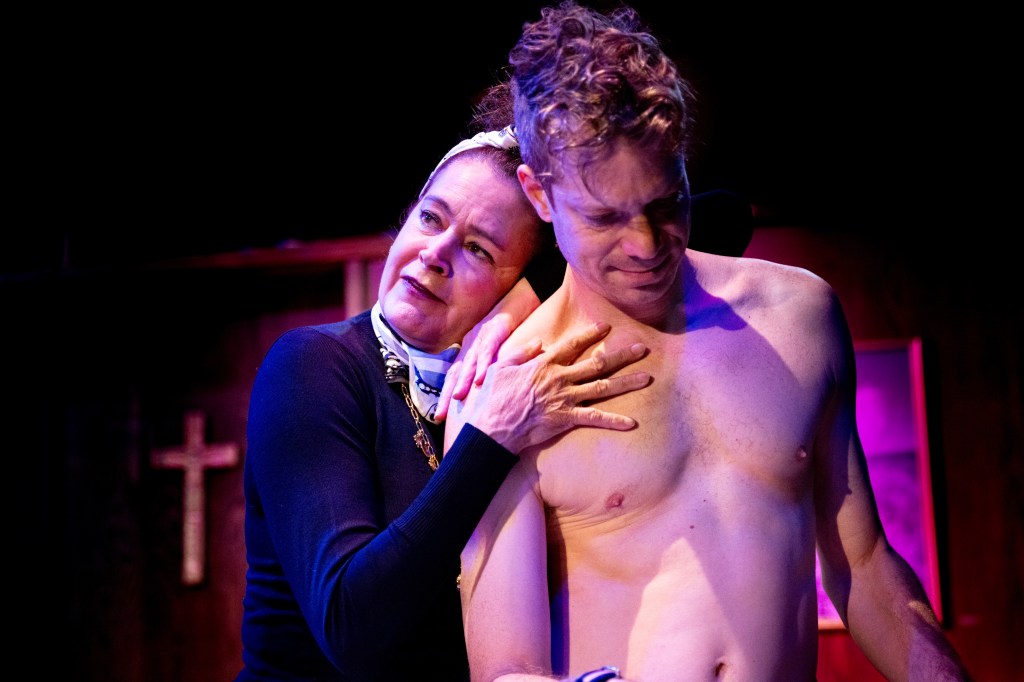
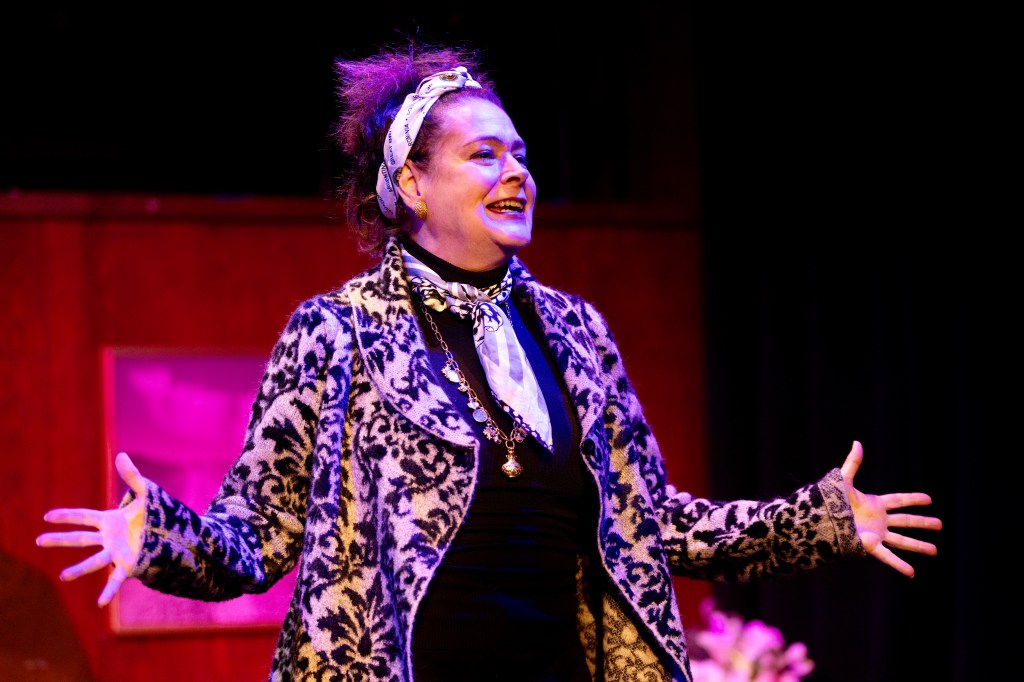
If Alscher-as-Switzer is a loose cannon, Sean Young as Susan Cabot is more like a ticking timebomb. The symbolic “fuse” is seemingly lit by an innocent visit from a showbiz reporter (David Wenzel) who sees right through her name-dropping façade of glamour. Young’s performance could have easily been swallowed by her own heavy star presence or by the temptation to play Cabot in an over-the-top, scenery-chewing way. But to her credit, Young still captures all of Cabot’s bizarre nature without going into dramatic overdrive or camp; the result is eerily disquieting. But make no mistake: Cabot was indeed bizarre. As written by McDowell, she was prone to frequent fits of temper. She was alternatingly overprotective smothering and cruel to her childlike 22-year-old son (played by Alscher again), who eventually reached his breaking point, with horror movie-style results.

Act 3 visits George “Superman” Reeves, played by Douglas Everett Davis. The scene explores the last days of the strapping TV star, when he was struggling to go beyond his superhero TV image and dealing with his deteriorating relationship with “party girl” Leonore Lemmon (played excellently by Anna Telfer). If “Alfalfa” was despondent over not being recognized by the masses anymore, Reeves had a different problem: He couldn’t overcome his identification with the “Man of Steel”. (Is it wrong that even this reviewer wanted to see Davis in the Superman suit?) In one of the greatest scenes in Ode to the Wasp Woman, Davis’ Reeves meets a hobo on the street (Jonathan Hartman) who just cannot mentally distinguish Reeves from the real Superman. It’s alternatingly sweet, funny, and heartbreaking, as well as a keen insight into the phenomenon of stardom when viewed through a 1950’s lens. The real tragedy, however, comes soon afterward. The story of Reeves’ untimely fate is still considered controversial, and McDowell’s script doesn’t shy away from that element of the story.
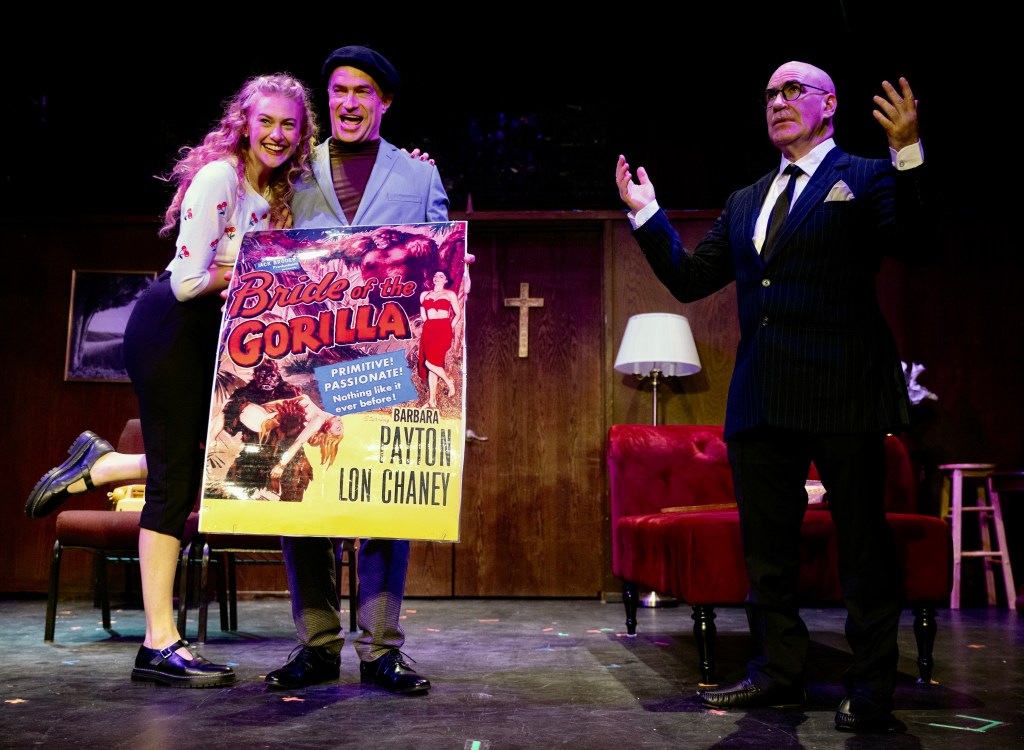
Unlike the previous three acts, the final segment of Ode to the Wasp Woman gives the audience some insight into a star’s life before their last tragic 48 hours. That star was Barbara Payton (Payton Georgiana), who quite literally drank away her 15 minutes of fame. The play alludes to how her childhood was a contributor, with a father (Hartman) who encouraged her to try booze at an early age. It then became a sad irony that Payton had to move back in with those parents when her career ended, resulting in even more dysfunction. It takes some suspension of disbelief to see the youthful Georgiana play the older Payton, who– by anecdotal evidence and photographs– wore her hard drinking and hard living on her face. That said, the actor’s performance is very touching. In the hands of a less sympathetic performer, lines like “I don’t have cirrhosis. I’m just tired…” could have provoked nervous laughter from the audience.
Ode to the Wasp Woman plays at New York City’s The Actor’s Temple Theatre— which is quite literally a temple that’s been in existence since 1923. There’s only so much that the creative team can do to disguise that fact. Thankfully, the performances and some creative lighting override the limits of the setting. The main cast is joined by equally fine supporting players (Anna Telfer, Jonathan Hartman, David Wenzel, and Rita Louise), all of whom play multiple roles. But the biggest asset of Ode to the Wasp Woman is probably its fascinating subject matter and the way Rider McDowell brings it to the stage. The cautionary tales of fame are more relevant than ever as we see the dawn of 2024.
Ode to the Wasp Woman plays a limited 13-week Off-Broadway engagement Nov. 7, 2022 through Jan. 31, 2023, at The Actors Temple Theatre (339 W. 47th St, NYC). For tickets and more information, visit Ode to the Wasp Woman (waspwomanplay.com).
(Photos by Maria Baranova.)
 LAVENDER AFTER DARK (because life begins when the sun goes down...)