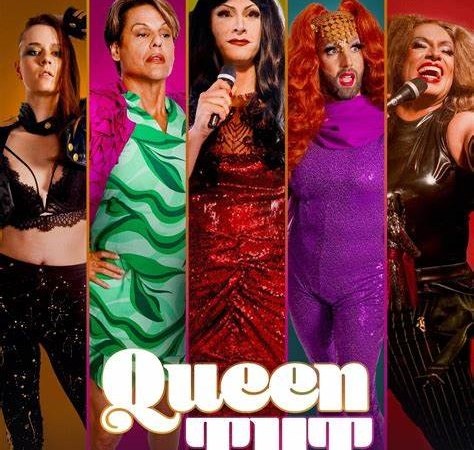
Arriving just in time for Pride Month, Reem Morsi’s delightful, heartwarming and oh-so-important award-winning drama Queen Tut renews my faith in independent LGBTQ filmmaking. At its heart, the film explores the universal challenge of finding one’s true self. For the LGBTQ world as a whole, it sends an important message about the true meaning of community: honoring queer history while also keeping an eye on the future. Queen Tut is also a reminder that even in the decades-old but still endless for equality, we must not forget the importance of those proverbial “ties that bind”. As one character states, in the midst of a battle to preserve a beloved queer cultural center, “Even if we lose, we’re still FAMILY!”. The movie shares many important messages, but it’s also highly entertaining– thanks to the writers’ (Abdul Malik, Bryan Mark, and Kaveh Mohebbi) realistically created characters and situations, the authentic settings and design, and the fine acting by the large and diverse cast.
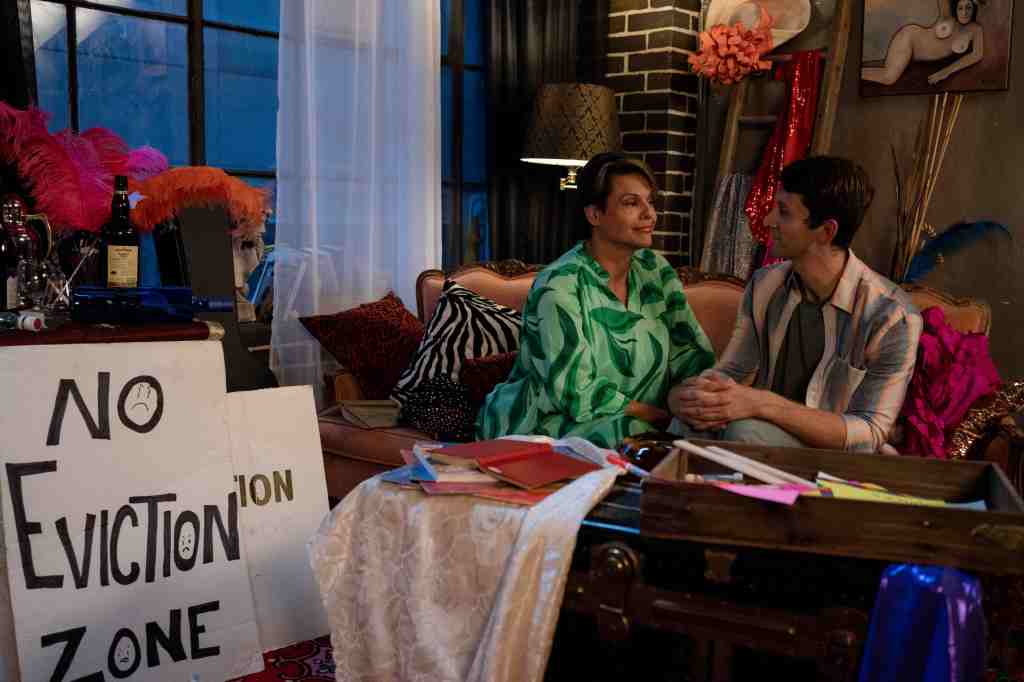
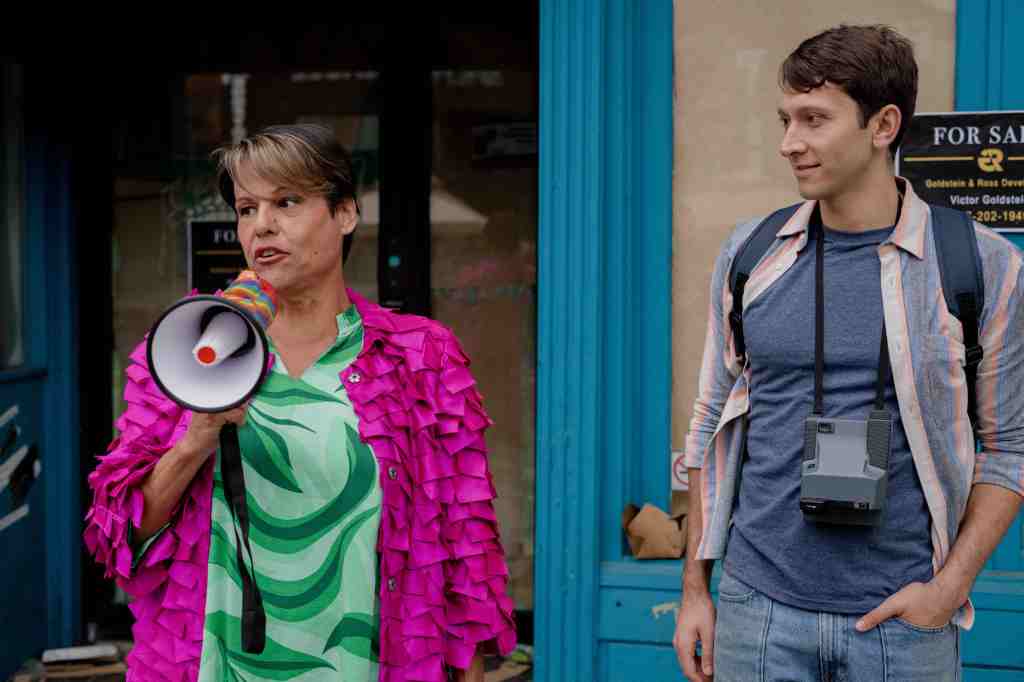
Set in the “gayborhood” of Toronto, Ontario, Queen Tut tells the story of Nabil (Ryan Ali), a 20-something Egyptian man who has recently moved from Cairo after the death of his beloved mother Selma, for whom he only has a scrapbook and a few re-discovered pieces of fabric to remember her by. He moves in with his loving but somewhat overprotective father Iskander (excellently played by Dani Jazzar), who is a well-connected real estate developer in Toronto. Dad’s attitude towards Pride is probably best represented when he tells Nabil, “It’s good for the city. It brings in a lot of money… but it’s not for people like us.” In another corner of town, LGBTQ activist and performer Malibu (Alexandra Billings), whom one character aptly calls “Her Majesty of Sherbourne Street”, is engaged in a challenge of a different nature. Malibu is trying to save Mandy’s, a bar and cultural center in the neighborhood named after a legendary matriarch of the community. Mandy’s is in danger of being mowed down to make condos. But Malibu is fighting for more than just a physical building. She’s also fighting for a larger cause: to preserve the city’s LGBTQ history. Malibu is doing this through a combination of fundraising, negotiation, and good old-fashioned direct action; She’s not averse to taking to the streets to shout out her message. It’s on those aforementioned streets that Nabil and Malibu meet, in a serendipitous twist of fate. The unlikely fast friends bond over an affinity for colorful, shiny fabrics. Faster than you can say, “girls, gays, and THEYS!”, Malibu takes Nabil into her adopted family of younger LGBTQ’s. Slowly, he explores the art of drag, which not only allows him to satisfy his creative side, but allows him to reinforce his bond with his late mother. Needless to say, Nabil keeps his new world separate from his old-school father, whose own life is largely guided by the Coptic Church and by his rising power in the real estate biz. Coming out as LGBTQ to family or friends has been a fertile source of inspiration for a seemingly infinite source of movies and theater pieces. Queen Tut sensitively explores the titular character’s challenge in finding his own identity, as well as the character ultimately discovering his place in his new community. Through Alexandra Billings’ Malibu, however, the movie simultaneously explores another challenge for the LGBTQ community which older members of the community have known about for a while. That challenge is the loss of queer-identified spaces — a very real phenomenon that has been sadly overlooked in LGBTQ discourse.
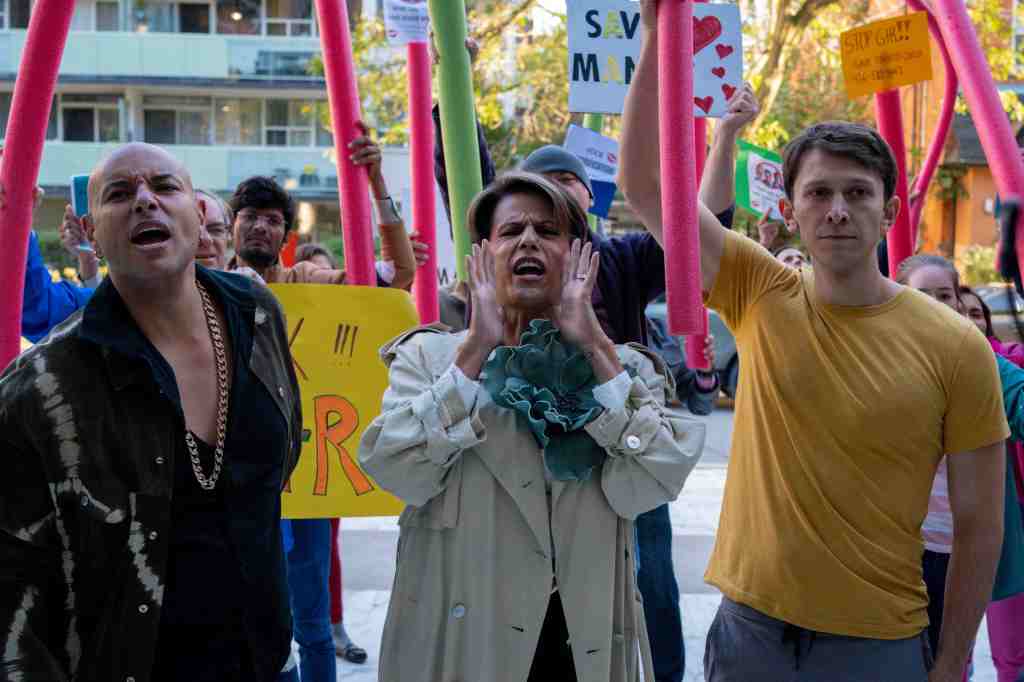
Queen Tut packs a lot into its running time, thanks to Reem Morsi’s fine direction: The movie is able to say so much, often with just a few lines of dialogue in a single scene. That said, the unapologetic abandon in the climactic scene where Malibu and her spiritual children confront the city board is just a cinematic delight of excess. The acting in Queen Tut is excellent. In the movie’s flashiest role, Alexandra Billings FINALLY and deservedly gets a role she can really shine in, with her character Malibu often delivering worlds of insight about the transgenerational LGBTQ experience with just a single monologue. She even gets her own musical number. As Nabil, Ryan Ali perfectly embodies the transformation of his character, first appearing on the screen with a look in his face that’s a combination of apprehension and fascination. Later on, there’s no mistaking his character’s bona fide joy when he starts to explore the art of drag; the scene of Nabil walking through the streets of Toronto for the first time in “face” is a winning moment– as is the reaction from his new queer family, who suggest a look that’s, uhm… “less esoteric”. the supporting cast is also wonderful, particularly Kiriana Stanton as the unapologetically riotous Ryan, AKA “Taz Deville”. To its credit, the film’s creators don’t make Nabil’s father Iskander into a one-dimensional villain; the scenes between father and son after Nabil reveals his “Queen Tut” persona are probably as culturally realistic as it gets.

Queen Tut is highly recommended! The film is now available on DVD and VOD via Cinephobia Releasing.
 LAVENDER AFTER DARK (because life begins when the sun goes down...)
Great coverage on this Jed! Truly want to see this film, loving the themes and relationships it explores!
LikeLike