
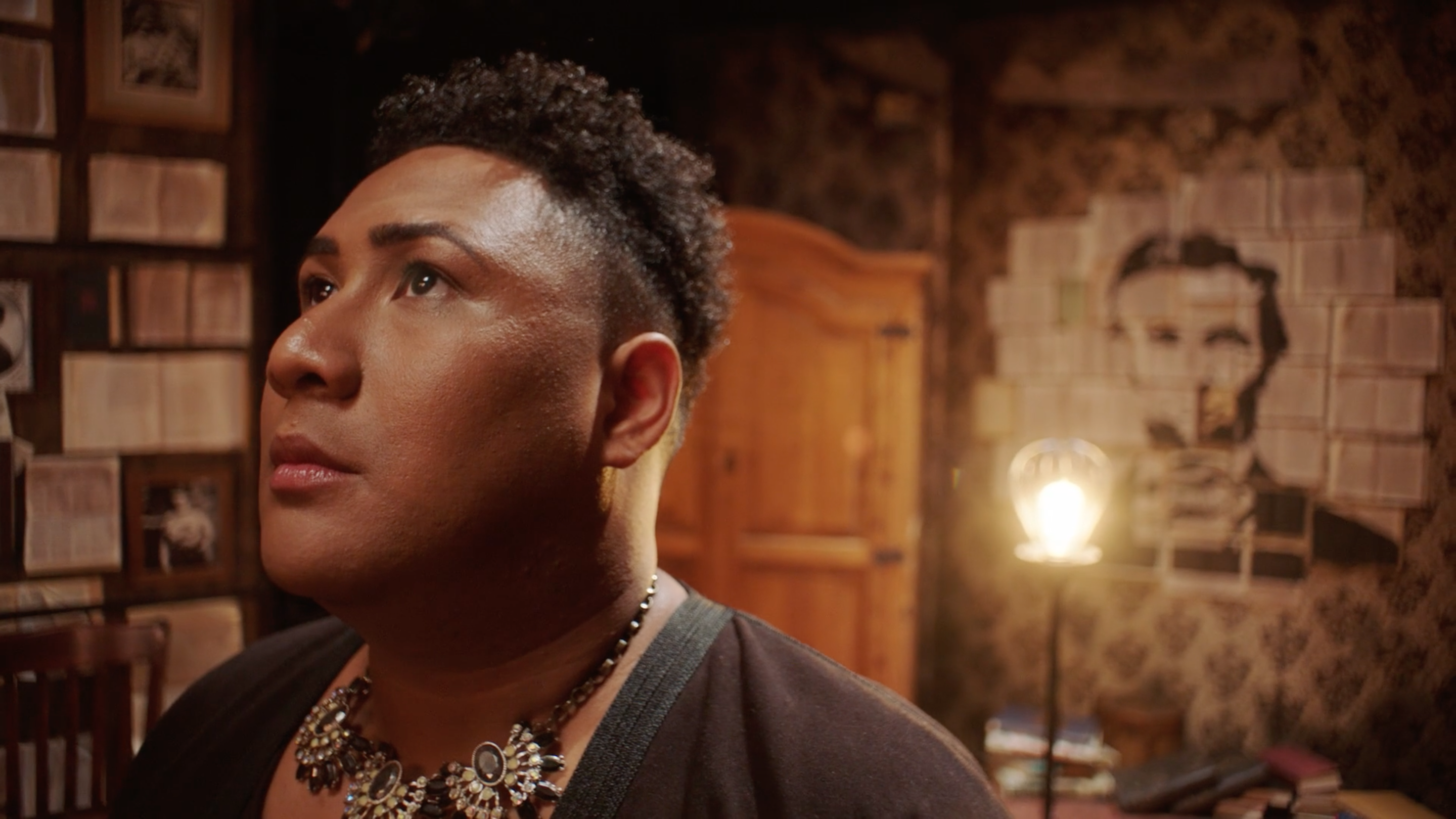
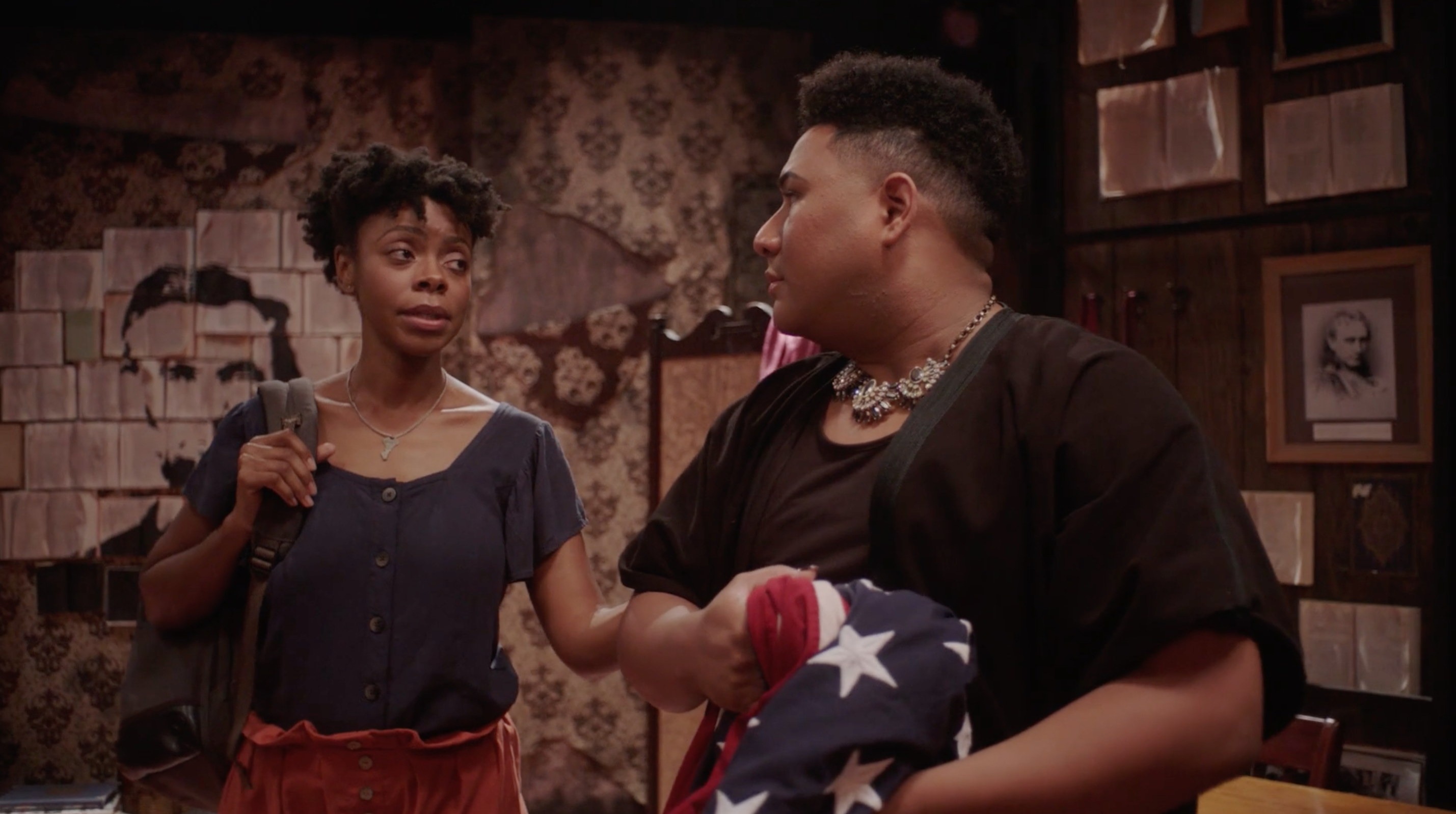
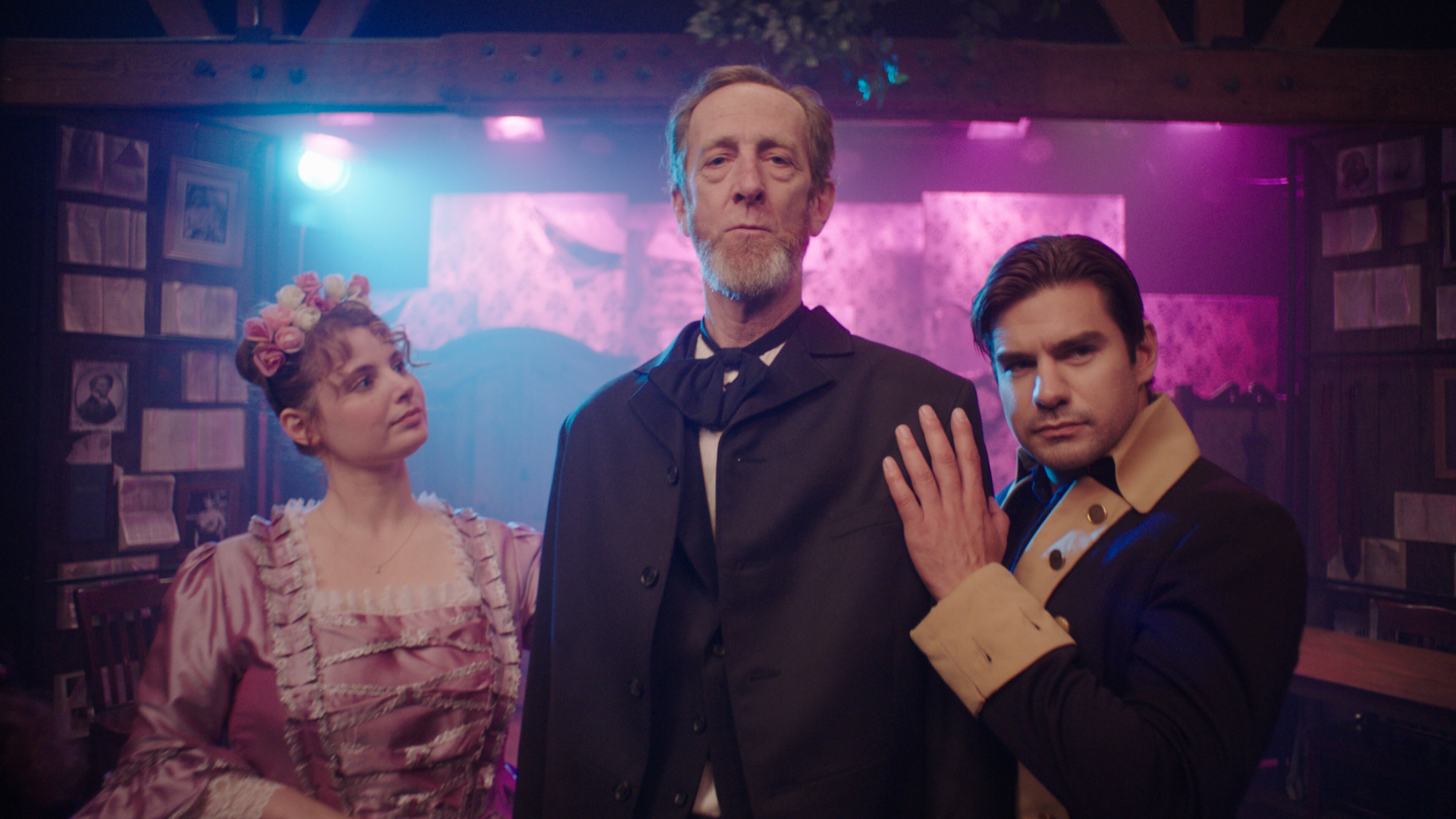
Lovell Holder’s highly original, provocative film Lavender Men is based upon the play of the same name by award-winning playwright Roger Q. Mason. Mason plays the central character of the movie, a queer person of color named Taffeta. When we first meet Taffeta at the beginning of the movie, they are working as stage manager for an unnamed play about Abraham Lincoln. From the few moments we see of this play, we can safely infer that the show is a real… shall we say, “snoozefest”. We also can infer that Taffeta, who is hungry for an intimate human connection, is too smart to be stuck gathering dirty clothes from the cast of a bad play. In what turns out to Taffeta’s last day as stage manager, the actor playing Lincoln (played by Ted Rooney, who resembles the real Abe so much it’s positively eerie…) doesn’t respect their pronouns– but that’s not the worst of it. A sexual assault nearly happens, followed by a series of insults based upon Taffeta’s physical appearance, race, and gender expression. The ugly incident turns out to be symbolic of the larger picture of Taffeta’s personal frustration: Right after that scene, the character looks directly into the camera and addresses their exasperation at having to navigate through a world where the guidelines of what society considers “beautiful” remain frustratingly rigid– and sometimes even cruel. As Taffeta implies, the situation is seemingly even worse within the gay male community. Taffeta then tells us, “I’m gonna tell you a story… And you ain’t gonna shut me up. I’m gonna tell you a story. It’s one of yours… but it’s gonna come through ME! Tonight, this stage is MINE… and for once, I’m gonna tell it MY way!”
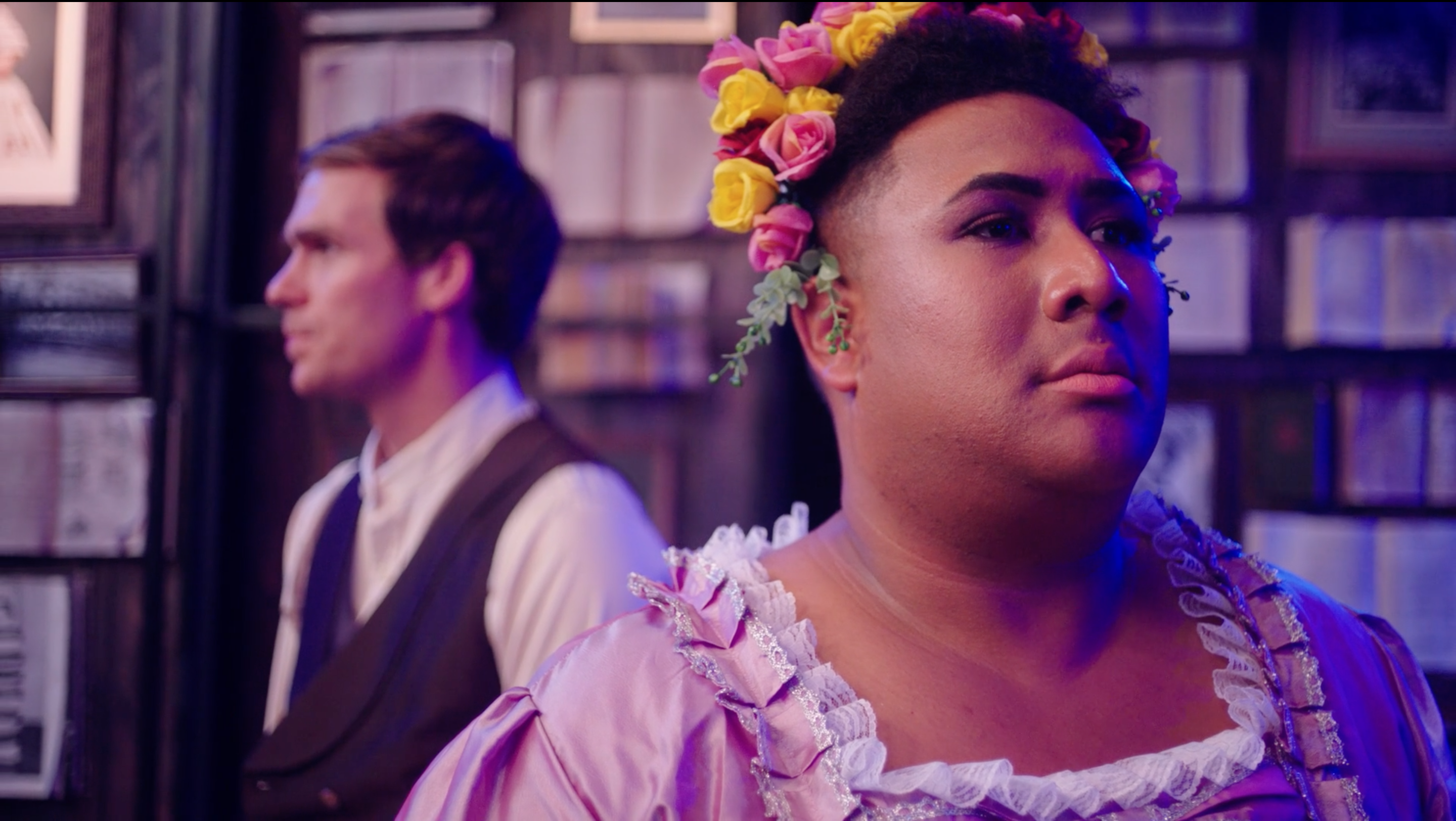
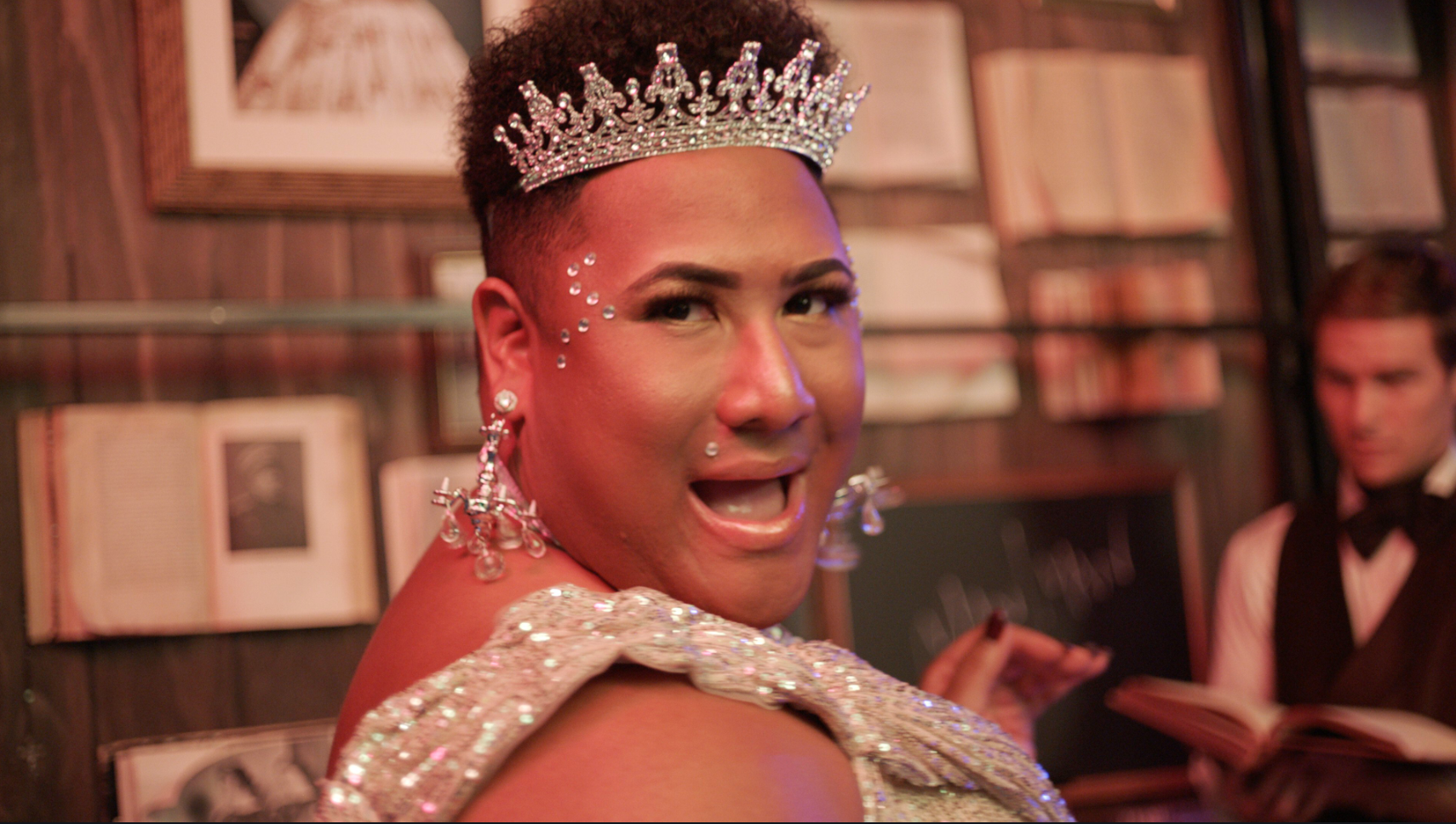
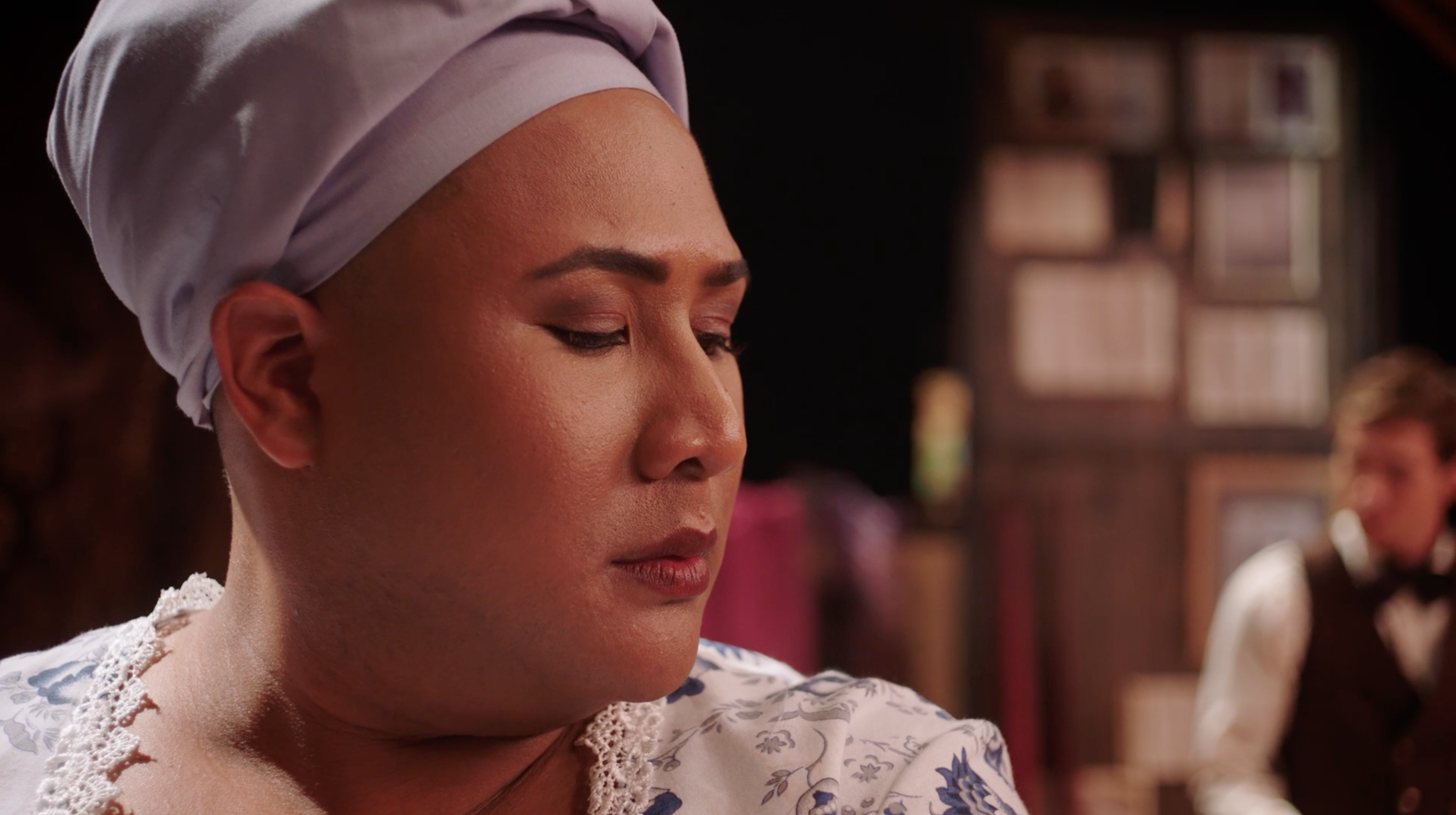
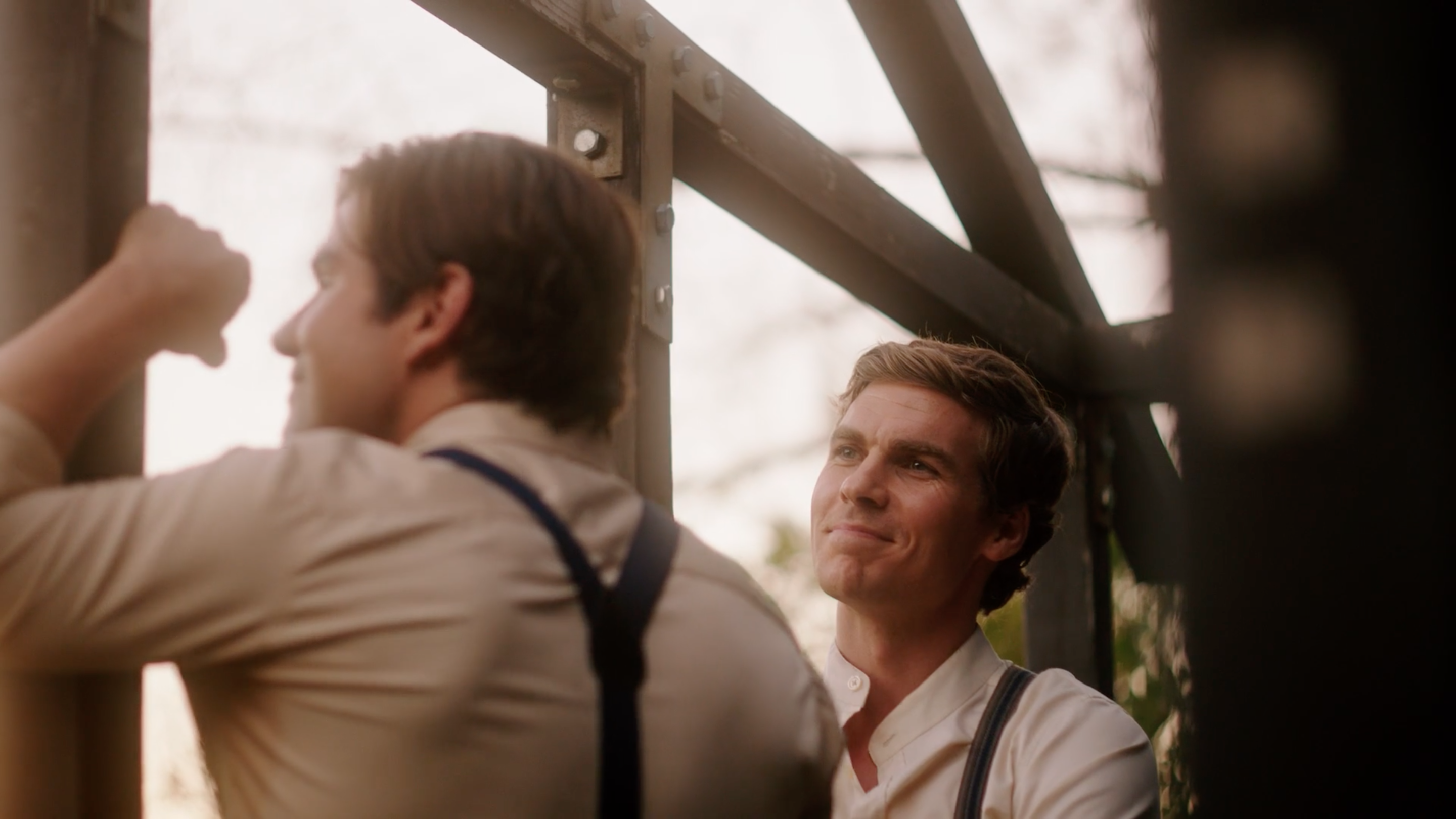
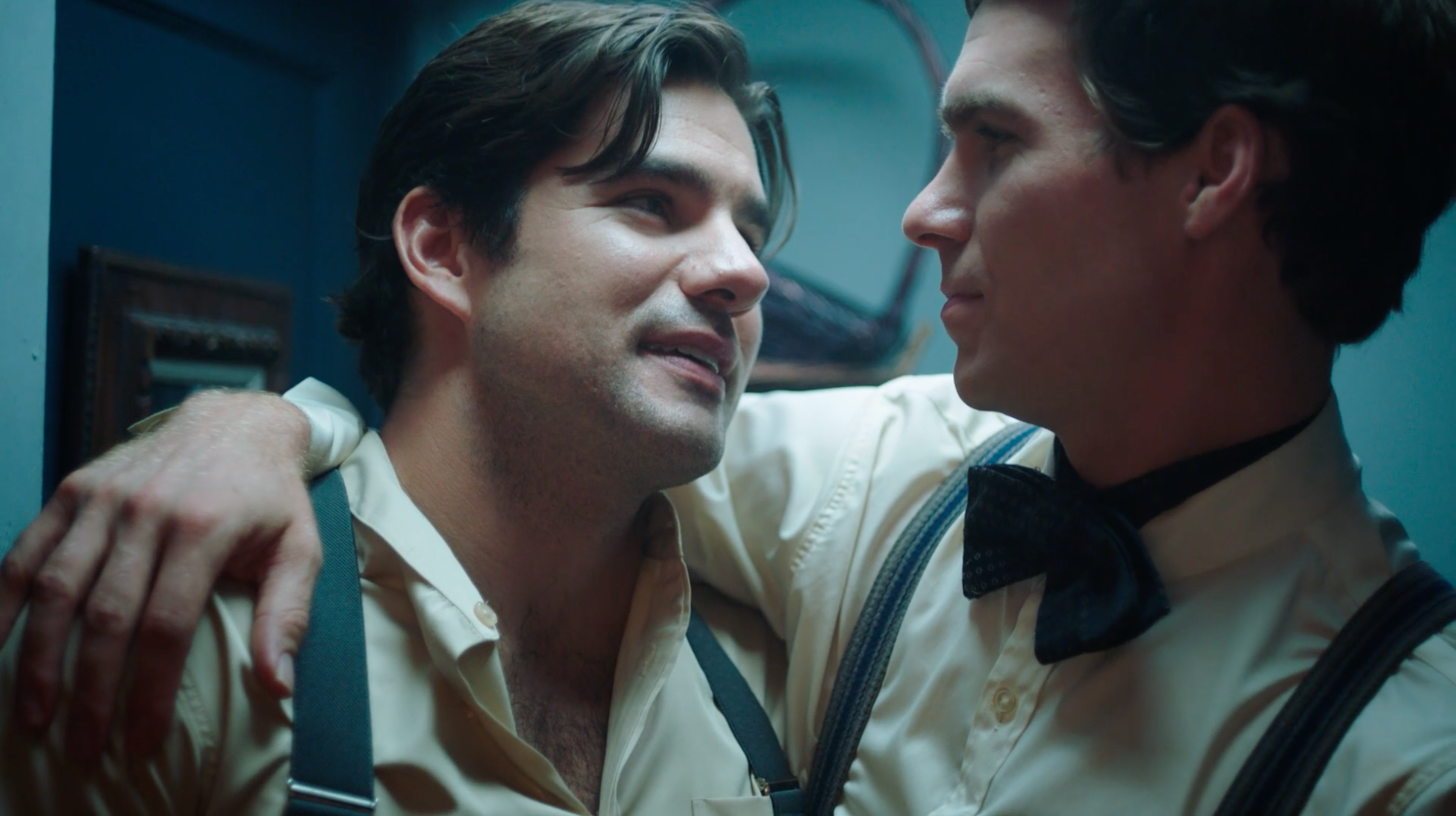
Lavender Men then takes on a fantastical tone: Through their own story, Taffeta reincarnates Abraham Lincoln (Pete Ploszek) and his friend-turned-lover, Army officer/law clerk Elmer Ellsworth (Alex Esola), as young, handsome men. (Taffeta declares, “This is MY fantasy, honey. Don’t they look good?!”) In between waxing poetic on law and politics, the two gentlemen roughhouse, skinny-dip, and discuss their ambitious plans for their future, leading up to “Honest Abe” becoming the 16th President of the USA. Sometimes Taffeta inserts themself directly into the story, taking on the personas of the “secondary” characters in the men’s lives. They include (1) a soldier in 1860, the year Lincoln and Ellsworth first met; (2) the emotionally labile Mary Todd Lincoln; and (3) “Sister Sadie”, a 19th century free woman of color. Other times, Taffeta sits quietly in the shadows, watching the two men’s relationship move from friendship to something far, far more intimate. For Taffeta, the relationship between Abe and Elmer is something of an emotional double-edged sword: While they see the two men’s story as something of an idealized version of queer love, they also bemoan that such glamorized “l’amour” may sadly be elusive to them.
Written by Lovell Holder and Roger Q. Mason, Lavender Men lives up to its own muscly ambitions, successfully utilizing the stage-to-screen adaptation to its maximum advantage. The film takes great pride in respectfully exploring the mores of its 19th century subjects. Yet through the modern experiences of its main character Taffeta, Lavender Men also simultaneously tackles some hard-hitting modern issues relevant to the LGBTQ community as we approach 2025. The movie even throws in a music video-style segment (I Am a Chandelier!). Most vitally, there’s a priceless message at the film’s oh-so-symbolic conclusion. It is about the importance of self-acceptance, but also about the need to tell our own stories rather than trying to fit into pre-existing narratives of which we were never part of in the first place. Perhaps no one knows this better than the creators of Lavender Men.
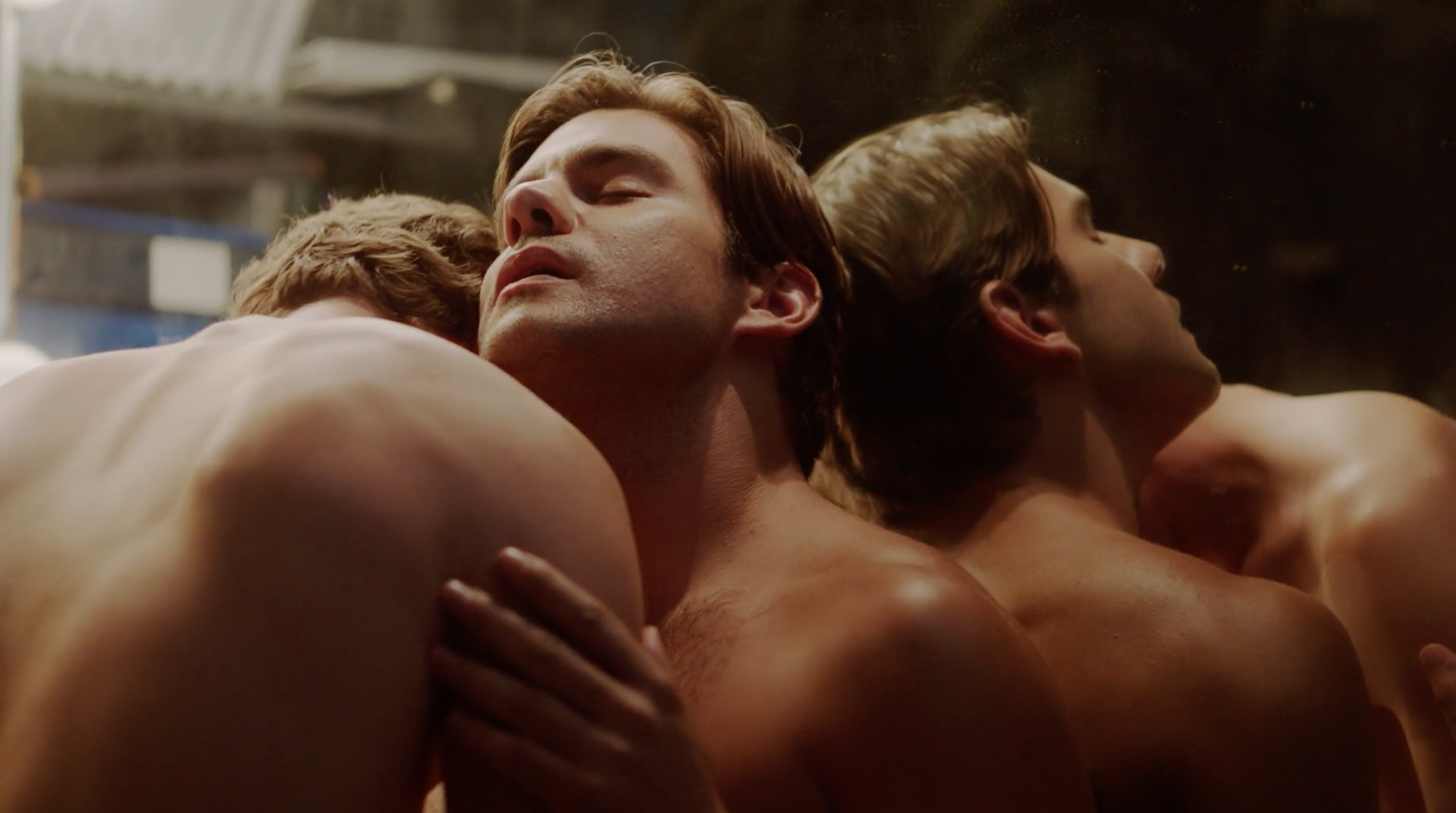
The cast of Lavender Men features Roger Q. Mason (Outstanding: A Comedy Revolution on Netflix) as Taffeta, Pete Ploszek (Michael Bay’s Teenage Mutant Ninja Turtles franchise; the upcoming final season of You on Netflix) as Abe, and Alex Esola (Bart Freundlich’s After the Wedding at Sundance; The Young Pope on HBO) as Elmer. The supporting cast includes Philippe Bowgen, Chad Callaghan, Linnea Liu Dakin, Natasha Dewhurst, Mia Ellis, Cherie Corinne Rice, Ted Rooney, Charlie Thurston, Tyler Woehl, and Gillian Williams. Lavender Men was produced by Mia Chang, Mia Ellis, Lovell Holder, and Roger Q. Mason with Executive Producers Rob Massar, Christopher Donaldson, Paul Hart-Wilden, Gary Grossman, Jon Lawrence Rivera, and Cece Suazo, Co-Executive Producers Gillian Williams and Matt Plaxco, Co-Producer Shirley Luong, and Associate Producers Letitia Chang and Seth Dorcey. The production team included Director of Photography Matt Plaxco, Editor Morgan Halsey, Production Designer Stephen Gifford, Composer David Gonzalez, Original Song “I Am a Chandelier!” by Kevin JZ Prodigy, Choreographer Jobel Medina, Vogue Choreographer Cece Suazo, Intimacy Coordinator Talya Klein, Original Theatrical Intimacy Coordinator Ann C. James, Theatrical Lighting Consultant Dan Weingarten, Theatrical Costume Consultant Wendell Carmichael, Theatrical Sound Consultant Erin Bednarz, and Headdress and Jewelry Design by ONCH.
 LAVENDER AFTER DARK (because life begins when the sun goes down...)