
White Horse Theater Company understands the enduring appeal of Tennessee Williams’ works. On Thursday, April 17, the Company presented Three by Tennessee, an evening of three of Mr. Williams’ rarely seen short plays, at New York City’s envied hotspot The Players.
Viewed with a 2025 lens, the playwright’s vast body of work has become more than just entertainment. It has become a fascinating exploration of America’s transgenerational mores, both in how MUCH has changed and, conversely, how LITTLE has changed at the same time. When one of the characters in The Lady of Larkspur Lotion asks, “Is there no mercy left in the world anymore? What has become of compassion and understanding? Where have they all gone to?”, the audience struggles for an answer, reminding us that human compassion (or lack thereof) doesn’t seem to be dependent on the decade. Another question raised in this trio of short plays remains a crucial one as we enter the second half of 2025: When do dreams become delusions… or, vice versa? And while Williams’ literary heart seems to be deeply embedded south of the Mason-Dixon line, the author himself frequently seems to look at his own region of origin– culture, traditions, and all– in a sarcastic or sometimes tongue-in-cheek fashion. An example of this is when one of the characters in At Liberty looks out her window in tiny Blue Mountain, Mississippi and declares, “Death is the only thing they’d leave the lights on for in this ‘fabulous’ city!”
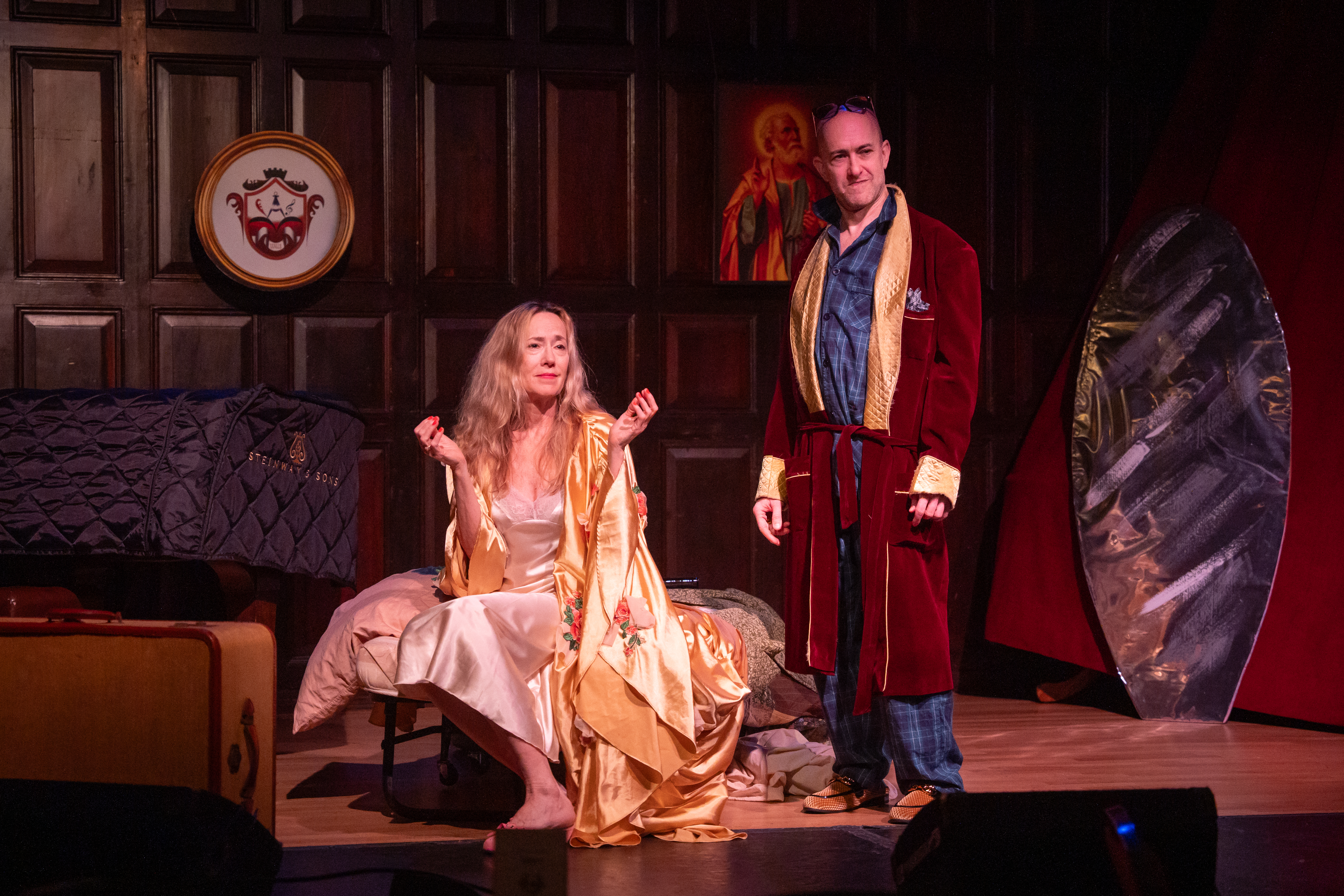
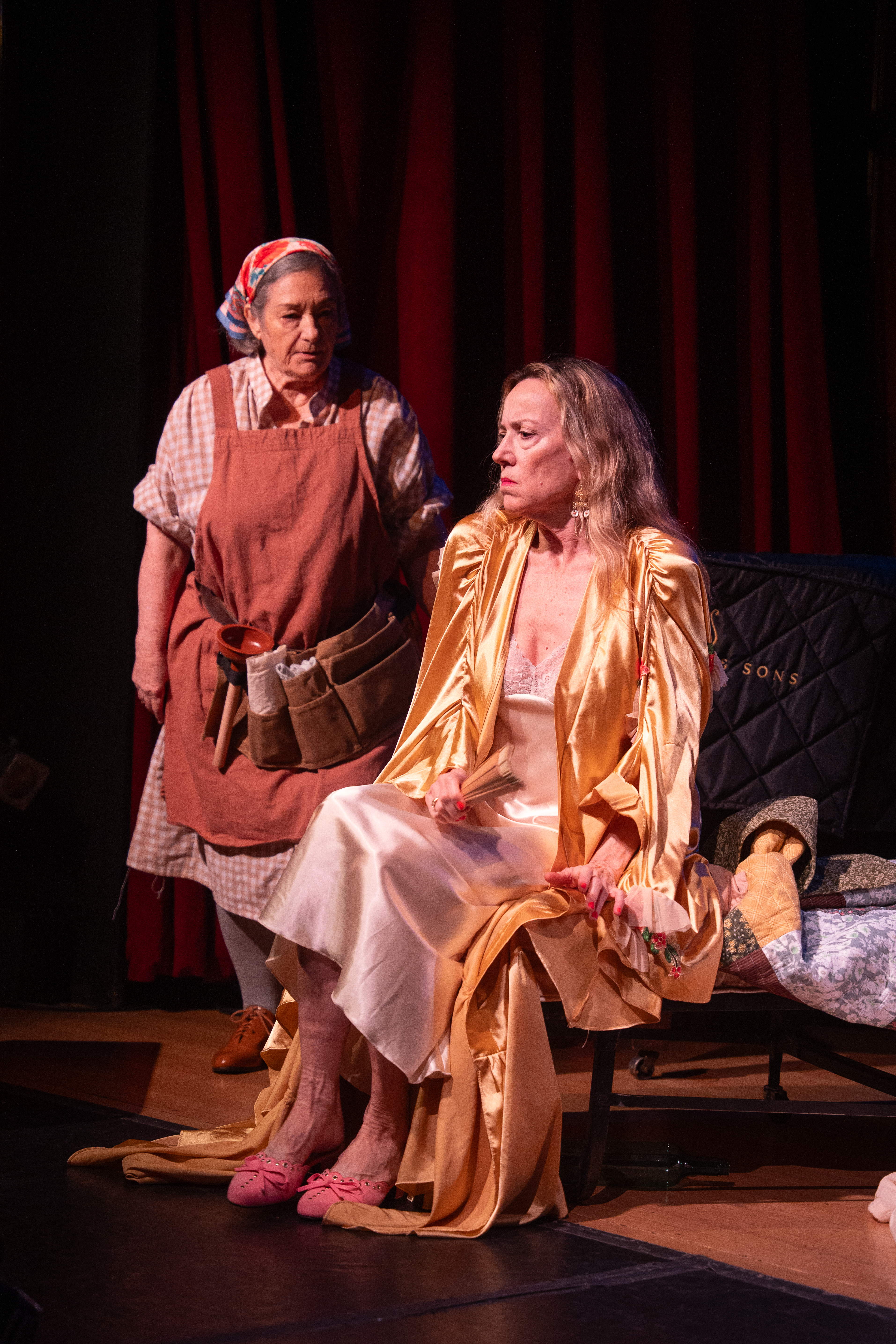
Via his more popular works, Williams has created immortal literary and cinematic female characters such as Amanda Wingfield, Maggie the Cat, and Alexandra Del Lago. Three by Tennessee continues his tradition of memorable female characters. The women own the spotlight in this triptych of short plays, all which have been begging to be seen again. One of those women is the titular The Lady of Larkspur Lotion, AKA Mrs. Hardwicke-Moore (Laura Fay Lewis). Our Lady lives in a (flying) cockroach-infested boarding house in New Orleans. A willowy blonde well past her days as a debutante, she’s still beautiful but clearly fragile and troubled; The audience is hardly surprised when an empty bottle of booze appears. (I will let you Google “Larkspur Lotion” on your own…) Mrs. Hardwicke-Moore has big claims about working for a rubber plantation, but it’s heavily implied that she works as, colloquially, a “lady of the night” This character is a partial antecedent to Williams’ Blanche DuBois– right on down to the setting of Nawlins’ French Quarter– as well as a cultural archetype for decades to come (specifically, “the aging beauty”, an archetype which I personally despise. Just say “beauty” and leave out the “aging” part!). Her hardened landlady Mrs. Wire (Nancy Wolfe) scolds her for her posturingly high-and-mighty attitude and for picking up random men– but this landlady is willing to turn a blind eye if she’ll only pay her back rent. The two women are joined by a third character, named “The Writer” (Michael Wiener). As the sole male character of this play (and, in fact, all three plays this evening…), “The Writer” is less, shall we say, “showy” than his female counterparts–which isn’t hard to be. Still, the focus slowly turns to him. Without giving too much away, it becomes clear that one of these characters (Two guesses won’t be necessary) is VERY clearly based in part on Williams himself. In a reality that can range from mundane to downright depressing– the antithesis of the glamour that Mrs. Hardwicke-Moore, or Blanche DuBois, or so many other of Williams’ characters try to create– this character tries to spin some much-needed fantasy. One could even argue that when it came to being an “expert ” on Tennessee Williams, even the best biographer couldn’t tell the true story better than Williams himself has already done, albeit through fictional characters. The Lady of Larkspur Lotion is deftly directed by Cyndy A. Marion. Laura Fay Lewis is a standout as the titular Lady, who hits lines like “I was so SHOCKED and DISGUSTED! Imagine FLYING COCKROACHES!…”, with the force of a hammer. As Mrs. Wire, Nancy Wolfe is Lewis’ formidable challenge for stage dominance.
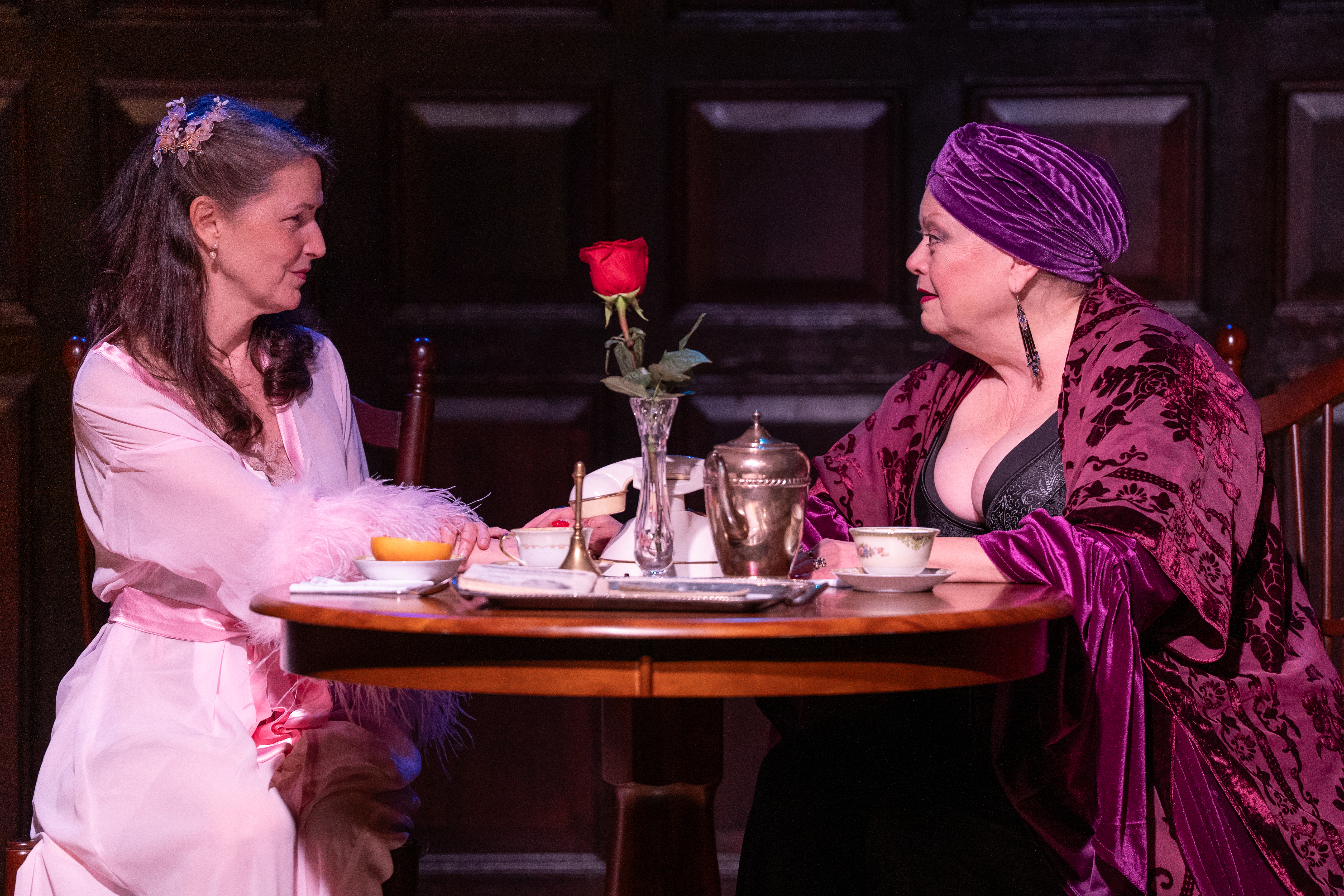
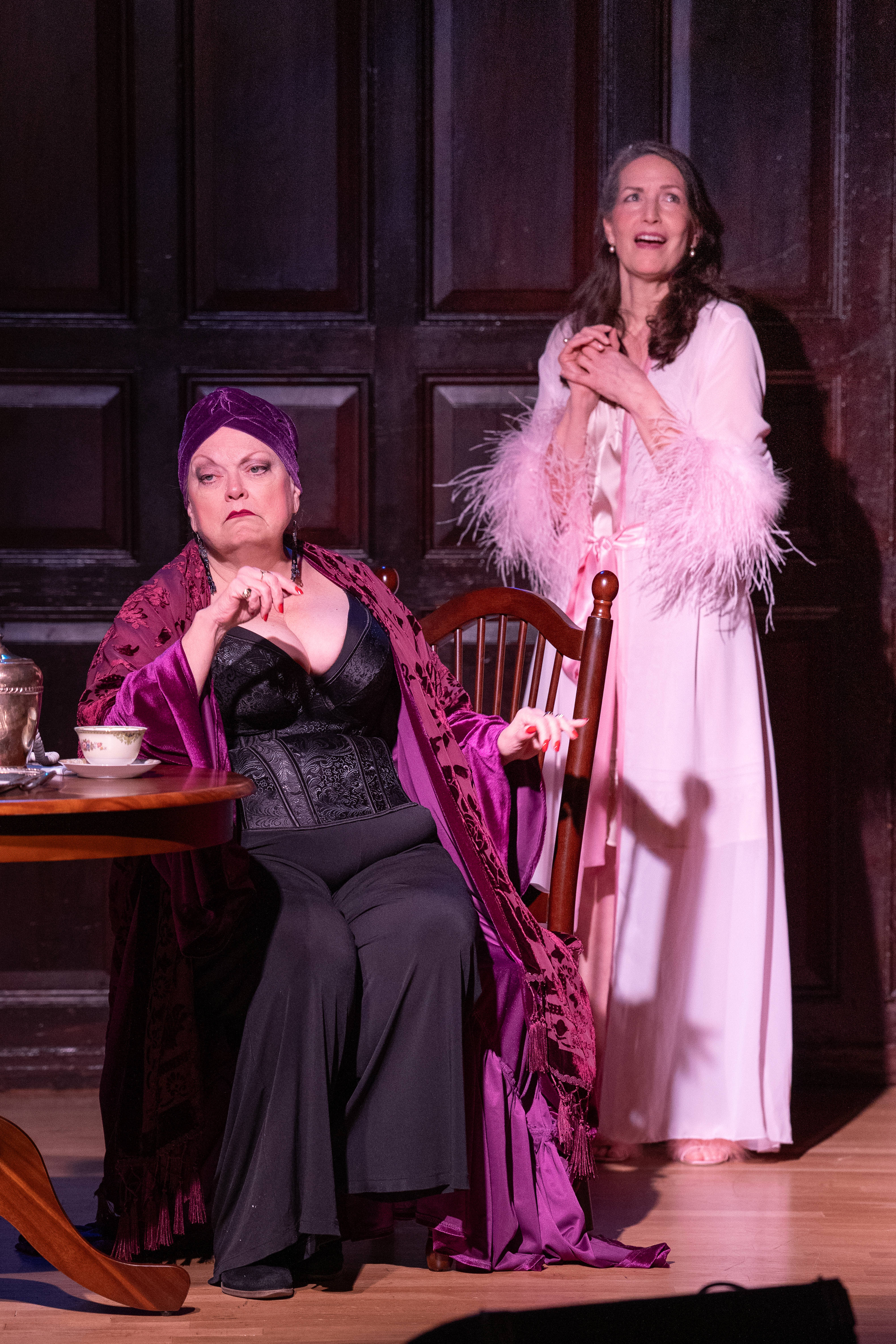
The second play is Something Unspoken. Just what is that “something” that’s “unspoken”? Astute audience members may figure it out before the reference… ahem, comes out– but certainly not before we meet our two characters. One of them is Miss Cornelia Scott (Linda S. Nelson), an unmarried, wealthy grande dame living on an impressive estate in Meridian, Mississippi. Also living on that impressive estate is her loyal secretary of 15 years, Miss Grace Lancaster (Laura Siner). As one of those proverbial “Ladies Who Lunch”, 1940’s style, Cornelia is eager to be elected Regent of the local chapter of Daughters of the Confederacy. Her desire becomes something of an obsession. As played by Nelson, the character is clearly an archetype of the over-privileged Southern idle rich. We laugh at her over-the-top choices of wardrobe. We laugh as she imitates her own secretary to decline an invitation. And, the audience laughs out loud when she tone deafly declares “I am NOT a snob!” as well as every time she alters her manner and the tone of her voice when her friend Esmerelda calls. But we are not just laughing at the character. We find the humor in just how rigidly she adheres to the expectations and reputation she has created for herself. The film explores the possibility of intimate feelings between the two women, albeit in a heavily coded form that’s very much in tune with the mores at the time. The dialogue never gets anywhere near explicit, much less even near mentioning any variation of the “L” word. Still, it is perhaps Williams’ best exploration of romantic intimacy between women. So, to backtrack a bit: It takes a relatively L-O-N-G time for the words “something unspoken” to even be… well, spoken by one of the women. But before that, the audience gets to enjoy the slow-boiling undercurrent between the pair. Like the first play, this one is also finely directed by Cyndy A. Marion and features great acting. The character of Grace seems to be in danger of being eaten alive by the more flamboyant Cornelia. But thankfully, Grace gets her own moments in the spotlight, with a provocative speech about Two Shades of Grey. Just as Cornelia is perfectly played by Linda S. Nelson with expected grandiosity, Grace is perfectly played with nuance and, well, “grace” by Laura Siner.
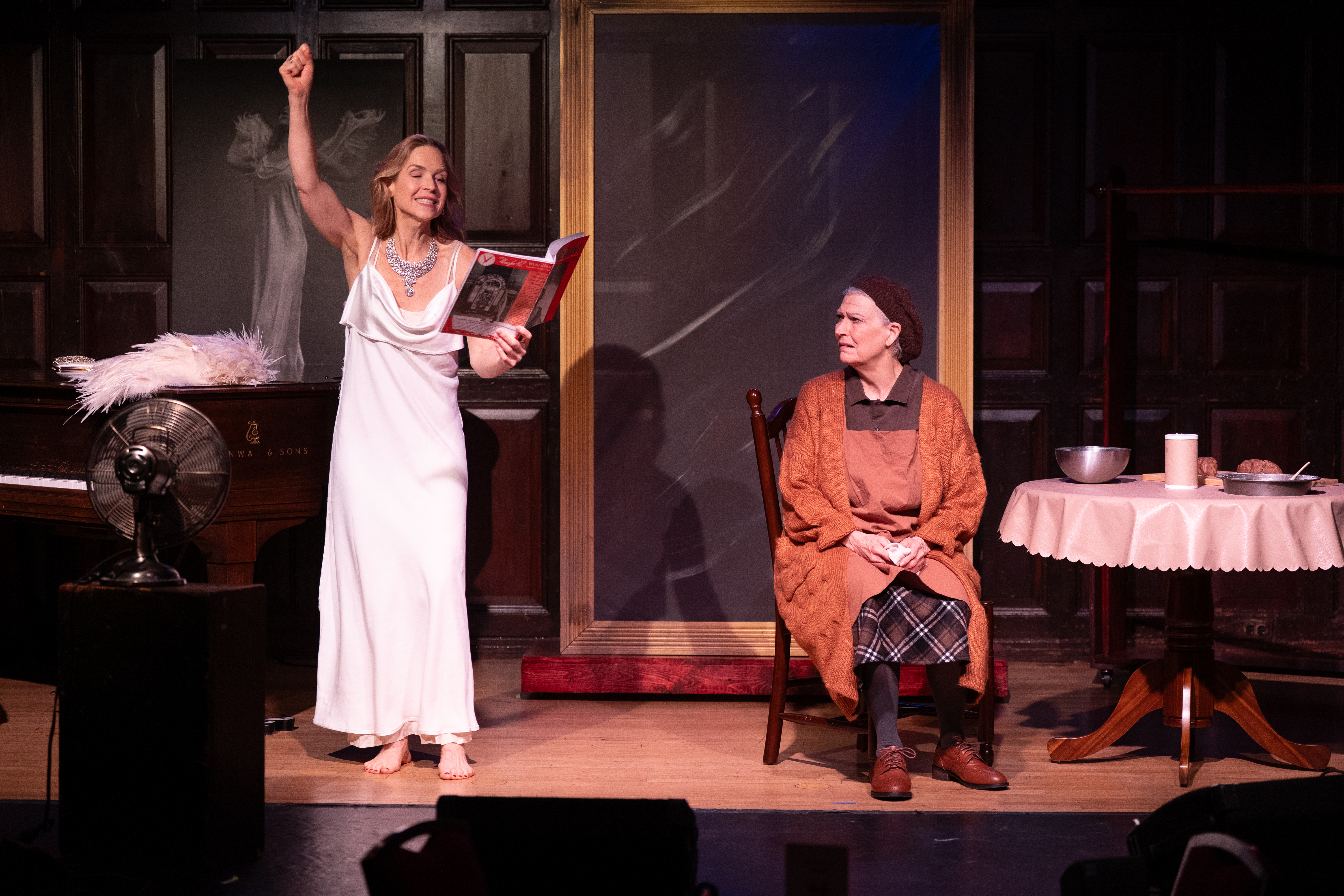
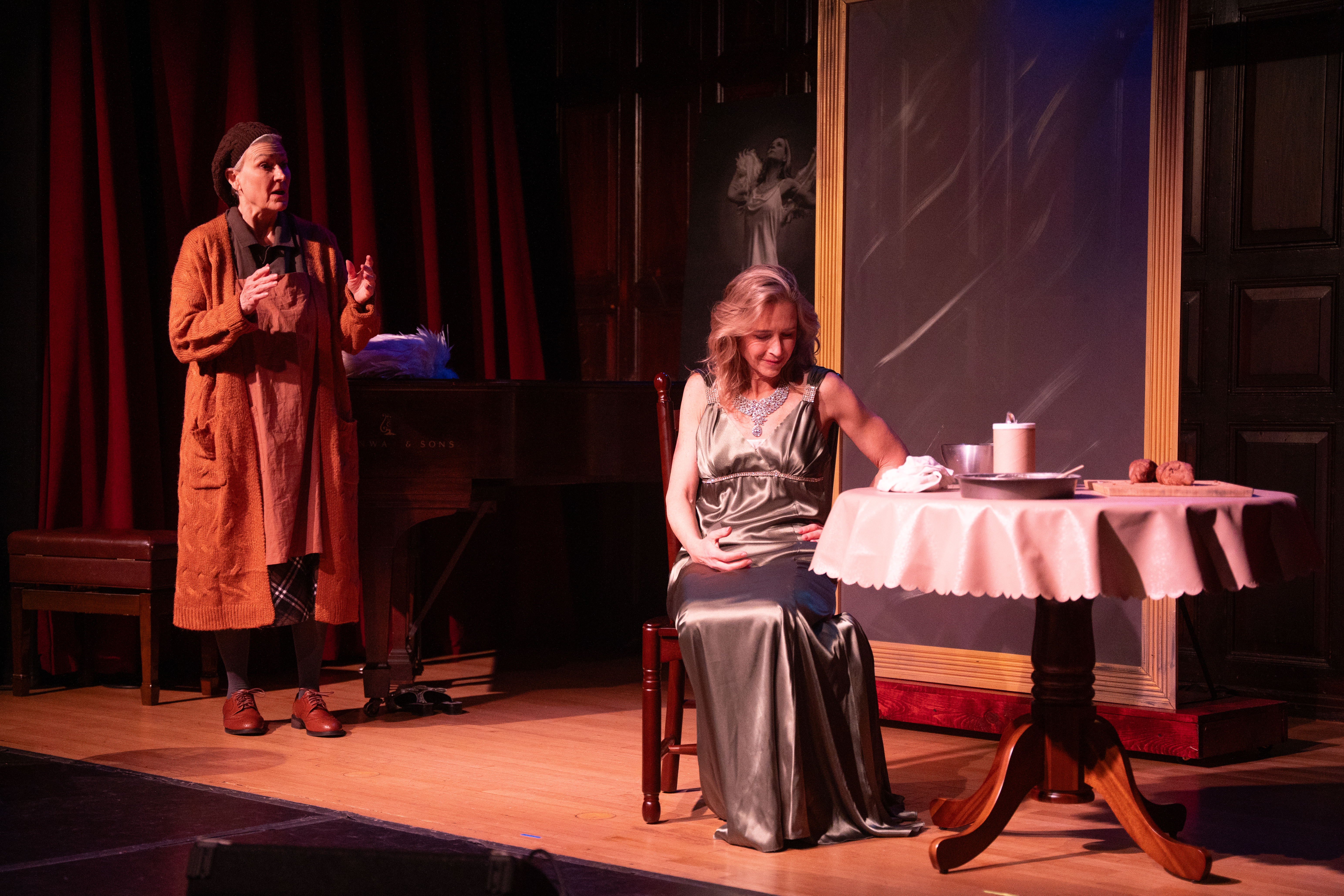
Not to be confused with Elaine Stritch’s 2001 one woman show, the “At Liberty” of the title of evening’s third play, directed by Yonathan Esterkin, refers to an ad in Billboard Magazine spotlighting the charms of actress Gloria La Greene (Margaret Curry). The play has the actress returning to her mother’s home in Mississippi to recover from an unnamed illness, likely tuberculosis. However, she has higher aspirations of renewed glory in Hollywood or on Broadway. There’s even a black and white portrait of Ms. La Greene back in her “glory days” hanging on the wall. After coming home at 2:30AM from a night of partying, Gloria is scolded by her long-suffering mother (Leslie Alexander) who frequently reminds her that she looks hot– as in “feverish”. The actress tells her mother, “You look like death!”, to which the mother retorts, “So do you– like death at a masquerade party!” The aforementioned phenomenon of the thin line between dreams and delusion really comes through in this piece. These characters are absolute equals in the audience’s sympathy department; I suspect that WIlliams did NOT want us to “take sides” with this play. Both Alexander and Curry are fine in their roles, with Ms. Curry giving her absolute all in the patently showier role– and she even gets to wear an assortment of eye-popping evening gowns, so that’s pretty cool too.
All three of the short plays of Three by Tennessee make the most of the intimate performance space; in fact, the small stage is an asset given that there are only two or three characters on stage at any given time. The detailed attention to set design and props (by Andis Gjoni) would shame bigger productions. The costumes (by Derek Nye Lockwood) are also noteworthy. And, as mentioned previously, the acting by all seven players is excellent. While likely patently written to be played with exaggeration, the actors portraying Mrs. Hardwicke-Moore, Cornelia Scott, and Gloria La Greene have just enough restraint to keep the characters from crossing the line into camp, which I’m sure is how Tennessee would have wanted it. Overall, the production was thoughtful, provocative, and often very funny. And. again, I have no doubt that that’s EXACTLY how the man born Thomas Lanier Williams III would have wanted it.
Visit Home – White Horse Theater Company for more! Also visit www.ThePlayersNYC.org for more about The Players.
(Photos by John Robert Hoffman.)
 LAVENDER AFTER DARK (because life begins when the sun goes down...)