
Any movie (or TV show, or play, or piece of fan fiction, etc…) which dares to take yet another trip down that famous yellow brick road is guaranteed to face that proverbial double-edged sword. In one way, any new Oz-related piece of media released to the public has its work cut out for it. The affinity for the 1939 movie The WIzard of Oz has not faded one iota in the last 87 years. (Need proof? People are eagerly buying tickets for up to $300 to watch the movie on a huge screen at Sphere in Las Vegas…). That said, those same Ozphiles who watch the classic film regularly (like me) can also be very critical if the creators of new media take too many liberties with their beloved characters, or if they drift too far away from the legendary big screen musical. That’s indeed understandable– but also quite ironic, given that many of L. Frank Baum’s Oz stories were far, far darker than even the scariest moments in the Judy Garland classic.
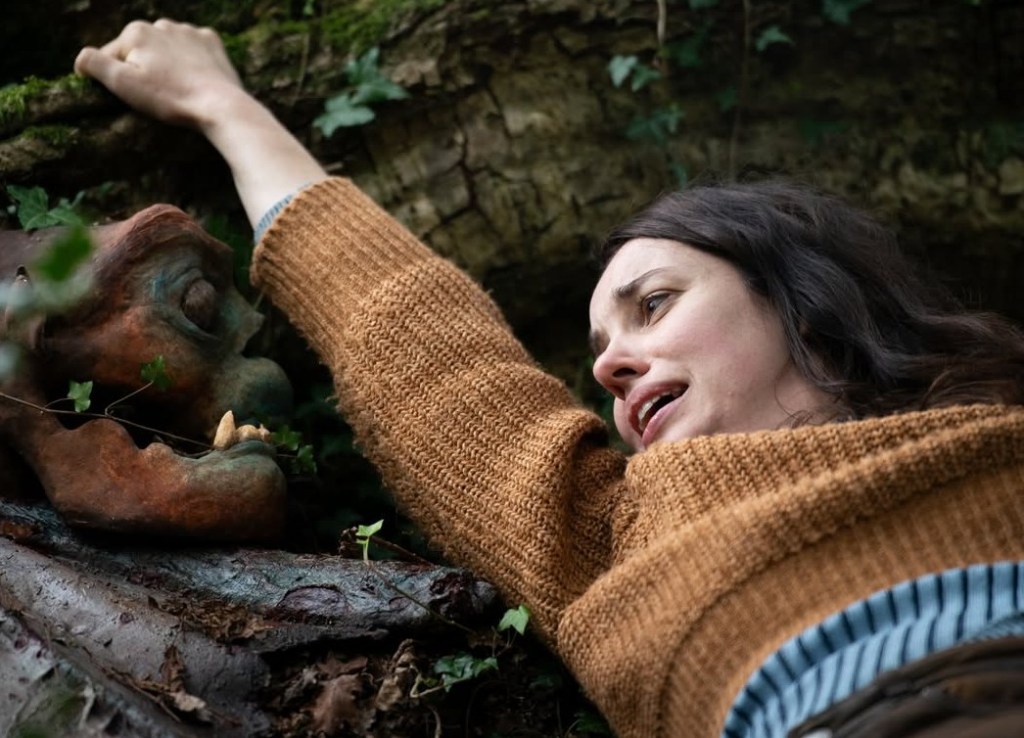
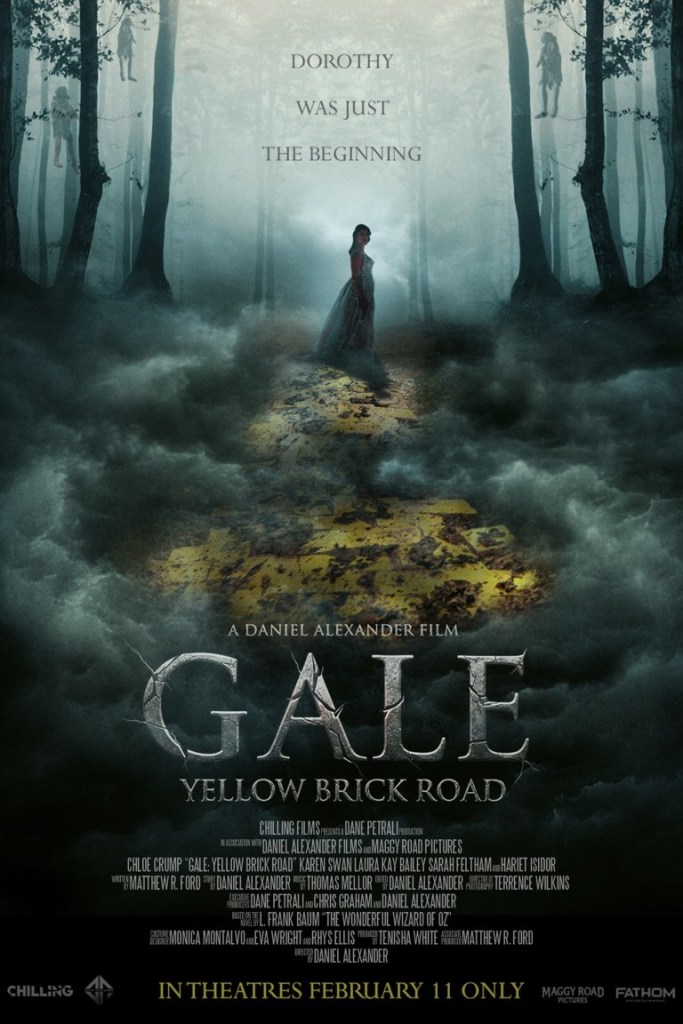
Gale: Yellow Brick Road, the unique and ambitious new thriller from director Daniel Alexander (who also co-wrote the film), enjoyed a one-day-only screening in theaters for lucky audiences on February 11, 2026. Gale: Yellow Brick Road, which is ostensibly the first in a series, clearly has the spirit of the original Oz books and some of the more renegade movie/TV interpretations in the past few decades, rather than the whimsy and over-the-top theatrics of the legendary Technicolor film. There are no catchy musical numbers or friendly, dancing Munchkins in Gale: Yellow Brick Road, and the creators trade the blindingly bright art deco set pieces of the 1939 movie for beautifully shot but unmistakably realistic and appropriately more subduedly lit settings. Being a horror movie, Daniel Alexander’s feature length debut has a few jump scares and some genuinely macabre moments, most involving a forest that’s home to some creepy inhabitants. That said, there’s nothing in Gale: Yellow Brick Road that would likely give nightmares to little children; or, put another way, there’s nothing that L. Frank Baum would have hesitated about writing about when he penned The Wonderful Wizard of Oz as a bedtime story for his own children. This new film is certainly not as disquieting as 1985’s Return to Oz, which Gale: Yellow Brick Road was clearly inspired by. In fact, I’d even say that the film is just as much psychological drama as it is horror movie.
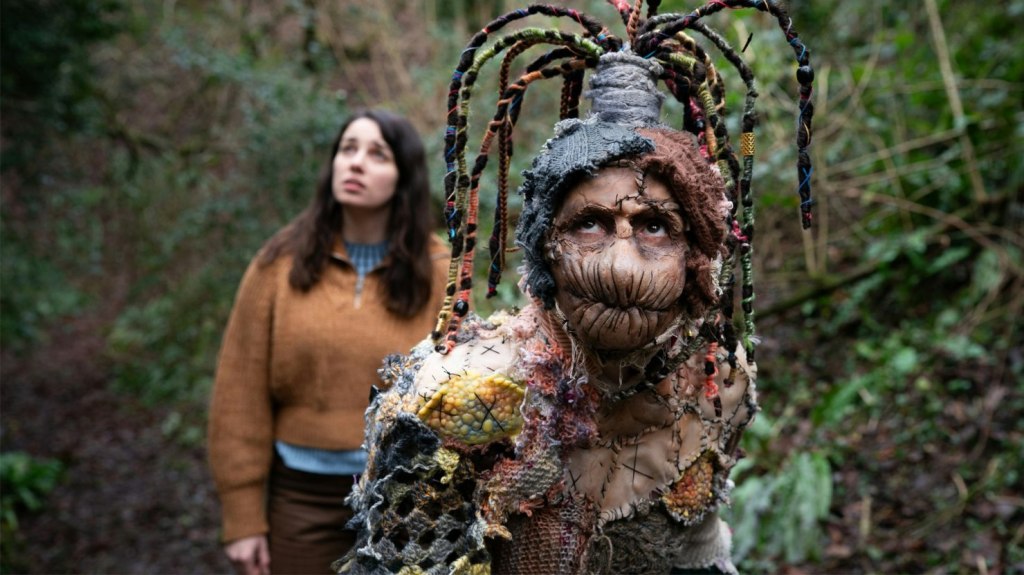
The main character of Gale: Yellow Brick Road is Emily (Chloë Crump), a single graphic artist who has presumably been experiencing depression after the death of her mother. She’s also plagued by nightmares, and she’s unable to find her creative and personal focuses, despite seeing a therapist named Linda (Dara Abasutë, who’s excellent). On top of that, Emily is also suffering from what could be called eisoptrophobia: fear of looking into mirrors. It’s intentionally symbolic of her inability to confront her own fears, or grief, or possible loneliness, despite the presence of her male agent/friend who seems to want to be wants to be “more” than friends with Emily. (The two seem very well-matched, by the way…) Finally, our main character gets the courage to overcome her fears and explore her late mother’s boxed possessions. One of those possessions is her mother’s sketchbook, which contains some disturbing drawings but also a phone number with a name: “Dorothy”. As it turns out, the “Dorothy” is Dorothy Gale (played by Karen Swan), who is now elderly, infirm, mostly non-verbal, and living in a institution run by an eccentric “administrator” (Laura Kay Bailey, who’s also excellent). We soon learn, in case you haven’t guessed by now, that Emily’s connection to Dorothy Gale is more than just an artistic curiosity. Shortly afterward, Emily finds herself transported to that aforementioned creepy forest, complete with broken yellow bricks and the constant threat of flying creatures (Monkeys?) in the air. It’s in this forest she meets a kind but nonverbal creature named Patches, played by Sarah Feltham. (Is this possibly an homage to The Patchwork Girl of Oz?). As Emily slowly puts the connection between Dorothy Gale and Oz together, the administrator wants Emily to believe that she is mentally ill and have her committed to the institution.
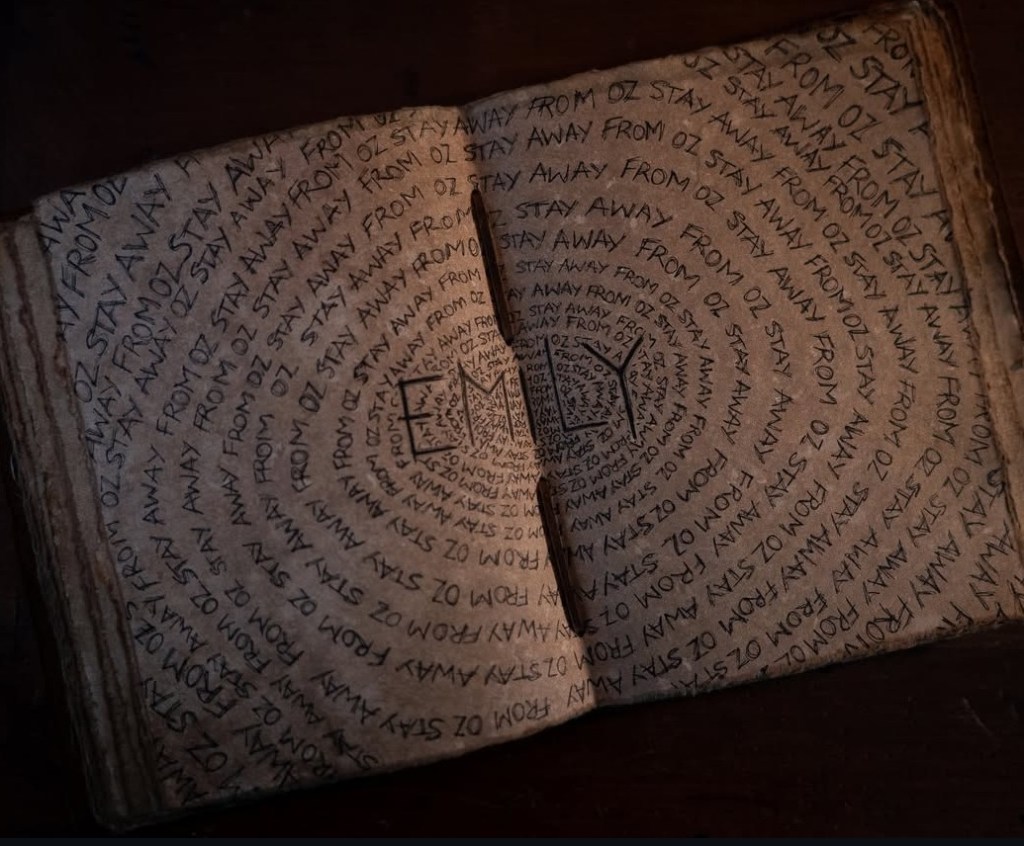
Had Gale: Yellow Brick Road ended at this point, it may have even gotten away with the idea that Oz was “just a fantasy” (oh-oh-oh-oh!) and all in Emily’s head. After all, this is 2026. We don’t believe in fairy tales, do we? But thankfully, the attempt at gaslighting the central character fails, and the creators gives way to a M-U-C-H more satisfying ending. The same way the 1939 movie had characters who have a presence in both Oz and in the “real” world at the same time, this movie does as well… although only the most astute of cinephiles may be able to figure it out before the revelations (For what it’s worth, I didn’t…).
Some critics may feel that Gale: Yellow Brick Road does not take full advantage of the extensive Oz lore, which includes 14 books by L. Frank Baum and a seemingly infinite number of media inspired by those books. But too often, that particular criticism is often a manifestation of people only wanting more of the familiar or obvious aspects of the Oz legacy: specifically, that 1939 musical again. However, this potential criticism is EXACTLY the reason why I believe that Gale: Yellow Brick Road holds its own among its pop culture peers. Surely, there is no shortage of “Easter eggs” throughout. I won’t give them away, but I will say that lovers of all thing Oz will have fun finding all of them. Some of that MAY have even extended to some of the casting choices. Is it me, or does actor Laura Kay Bailey bear a slight resemblance to Idina Menzel from Wicked? Likewise, Dara Abasutë definitely evokes Cynthia Erivo, not just with her looks but also with Erivo’s patented style of mannered coolness which can easily transform to VERY heightened emotions. However, with all of that said, Gale: Yellow Brick Road is highly original in its own renegade way. Actor Chloë Crump is on the screen almost the entire 107 minute runtime, and she definitely has the talent and charisma to be the central character.
The biggest criticism of Mr. Alexander’s film is, by far, its pace– particularly in the beginning. Specifically, too much time seems to be spent in Emily’s creepy basement and then in the creepy forest, with too little going on and no clear reason or payoff for the decelerated pacing. But overall, Gale: Yellow Brick Road is a well-made, respectful, unique, and entertaining entry into the transgenerational Oz legacy. L. Frank Baum would be proud.
 LAVENDER AFTER DARK (because life begins when the sun goes down...)