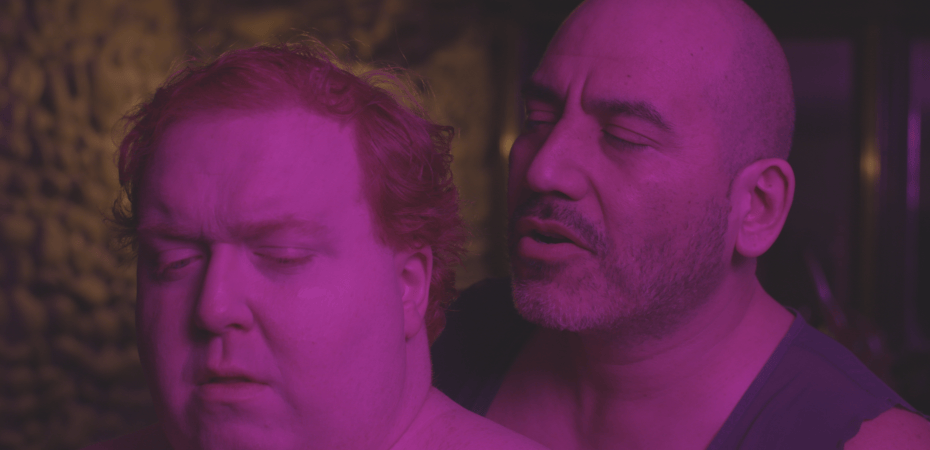
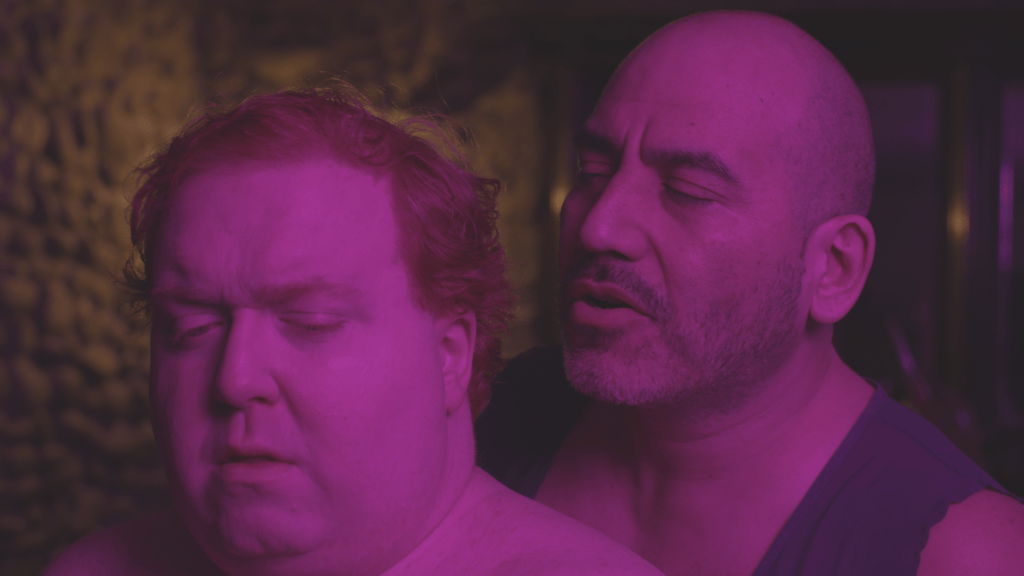
The Contract, a new film now entering the film festival circuit, is a queer, erotic horror‑thriller directed and written by Joshua R. Pangborn, who also stars in the movie. Taking place in the setting of a large, isolated country house that drips secrets, The Contract is shown largely through the perspective of its main character Oliver, a naive young man who enters an unlikely gay Dom/sub relationship with a sexy but mysterious Master. While The Contract has a fantastical element swirling around it, the background is as authentic as can be: The BDSM world is indeed a very real subculture which has been mostly misunderstood, frequently maligned, and often ridiculed throughout world history. While BDSM has been, and often still is, used in pop culture for the purposes of sexual exploitation or cheap humor, realistic explorations of the phenomenon in the LGBTQ community have arguably only recently been shown via mainstream cinema– perhaps most notably in Harry Lighton’s 2025 film Pillion. Like that movie, The Contract painstakingly and unapologetically explores the progression of a Dom/sub relationship. In the beginning of the film, the audience learns that Oliver (played by Pangborn himself) has left his comfortable but ostensibly lonely “vanilla” life to be a candidate for a power disparity relationship with a seductive, imperious Master named Bartolo (played by Pangborn’s frequent creative collaborator Mark-Eugene Garcia). The only other people in the vicinity, at least as far as the audience can see, are Bartolo’s blunt-spoken chef (Paul Antzoulis) and his current sub/servant: the enigmatic, often scantily clad Enrico (Elio Trevisan). That is, unless you count a seemingly omnipresent, creepy doll named “Dante” which the Master seems particularly fond of. More about that later…
Obviously, every personal relationship involving power exchange is different, with each one having its own… uhm, “contract” between its participants. That said, Pangborn’s movie does indeed depict the ritualistic aspects of a BDSM partnership with admirable authenticity. The filmmaker clearly did his research. The story may be puzzling to viewers unfamiliar with kinky relationships, particularly queer kinky relationships. Some may wonder why the ultra-“vanilla” Oliver wouldn’t be running out the door at the first enforcement of discipline by his Master. As that Master points out frequently, Oliver is certainly not obligated to stay. Theoretically, he can leave at any time. Yet thanks to the movie’s commitment to character development, the viewer genuinely understands why Pangborn’s character chooses to stay. He’s eager for connection. In several scenes throughout the film, Oliver describes his search for lasting companionship, and any single gay man navigating the battlefield of dating in the digital age can indeed relate. In fact, it’s a situation that MANY people, regardless of gender, sexual orientation, or size, can also likely relate to.

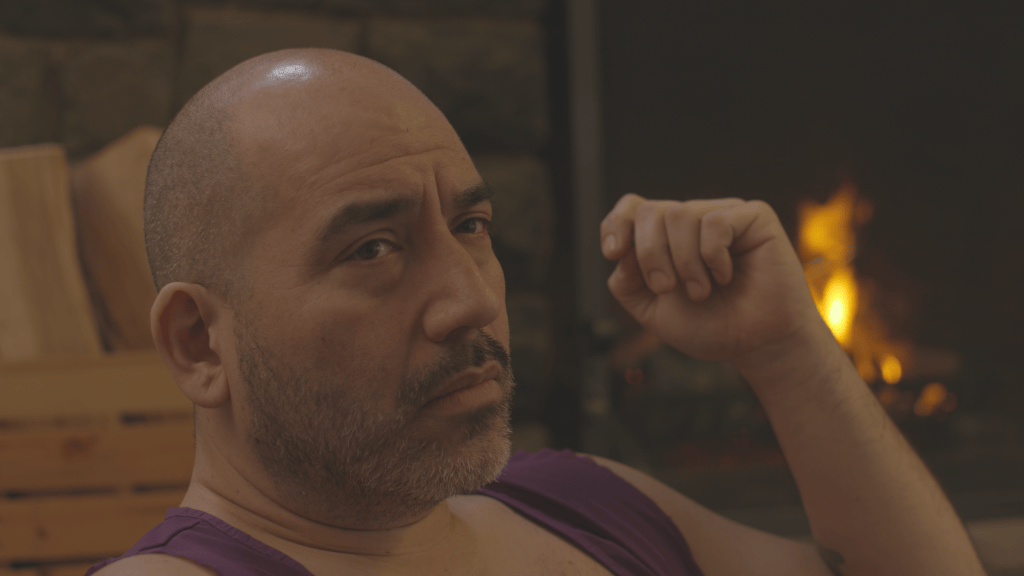
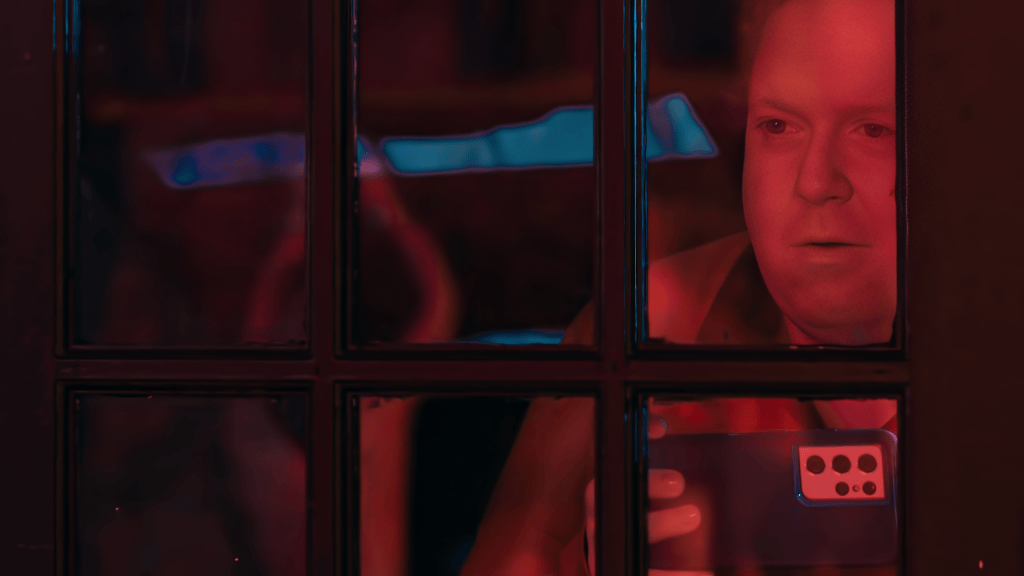
Realism aside, however, The Contract is indeed a horror movie, and the audience knows that there’s more to these characters than meets the eye– most likely, something sinister. Oliver’s commitment to his Master-to-be is challenged– not only through the intense, protracted ritual to prove his loyalty and dedication (which includes cleaning toilets and scrubbing floors), but also when some V-E-R-Y strange things start to happen at the house. Those strange things include a slowly rising body count: There’s clearly a killer running around the Master’s property, but a larger threat seems to be something completely unseen. As a warning, anyone with apotemnophobia, or who’s triggered by shapeshifting, dolls, or body horror in its many varieties should be wary! Speaking of dolls… What is the meaning of the aforementioned doll that seems to have a mind of its own? The film climaxes with a chilling twist that even the most astute viewer won’t see coming.
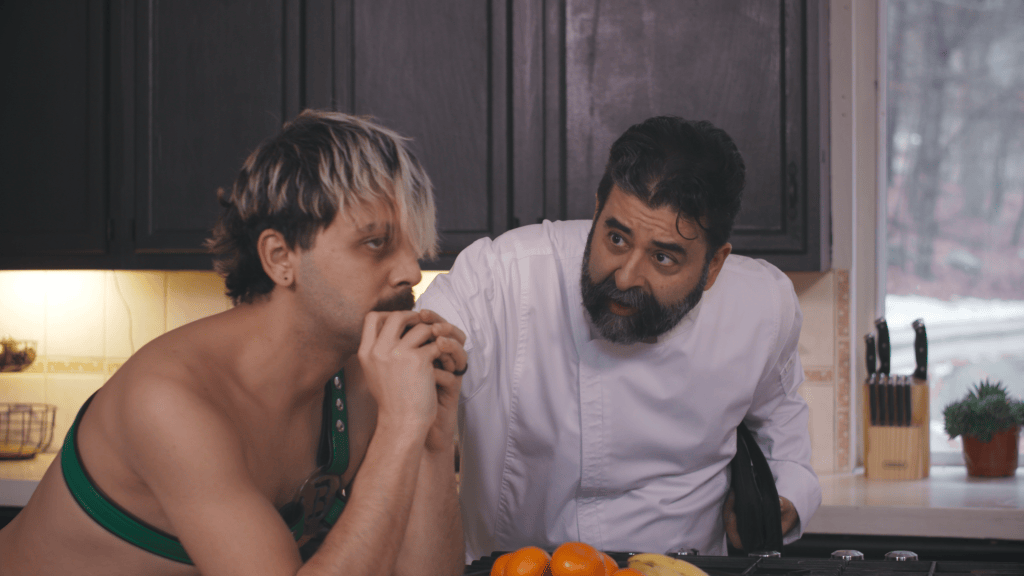
The performances in The Contract are all top-notch. As the main character, Pangborn has boldly chosen to take on a role which requires equal parts vulnerability and verve, especially with the film’s generous amounts of nudity and sex. That said, his character doesn’t take to masochism smoothly; Oliver adapts to his role as a sub as awkwardly as a hyena adapting to domestication– right on down to his defensive sense of humor. Mark-Eugene is well-suited to play the cocksure Bartolo: He combines an appropriately authoritarian attitude with an idiosyncratically regal sense of style, even when he is barely wearing anything at all. Elio Trevisan is excellent in the role of Enrico, complete with a deadpan directness as he tries to gently, warn uhm… “prepare” Oliver of what’s ahead: “This is not just gonna be cock cages and cum puddles!” Rounding out the main cast is Paul Antzoulis as the Chef. Like Enrico, this character is clearly keeping secrets. Stuart Kiczek plays Jason, a horny, beary sub wannabe who rivals Oliver for Bartolo’s attention. It’s a funny, over-the-top performance. Actor Michael DeSanto (The Death of Snow White) and popular New York City drag star Coma White appear in brief but titillating cameos; Given director Pangborn’s tendency to cast his actors in multiple projects, let’s hope we see more of them in the future. The cinematography, by Mick Kunz, is sharp, clean, and highly atmospheric. The Contract is also unique in its much-welcome commitment to body positivity.
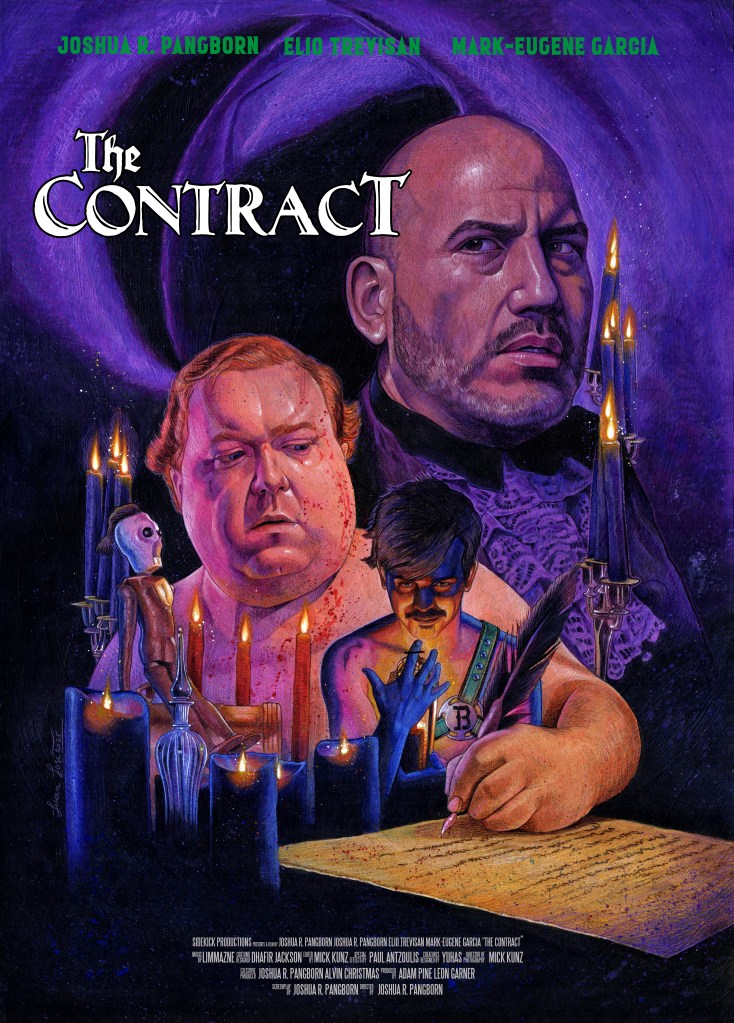
The Contract is highly recommended. Look for it coming to theaters soon.

